




The Darjeeling Himalayan Railway
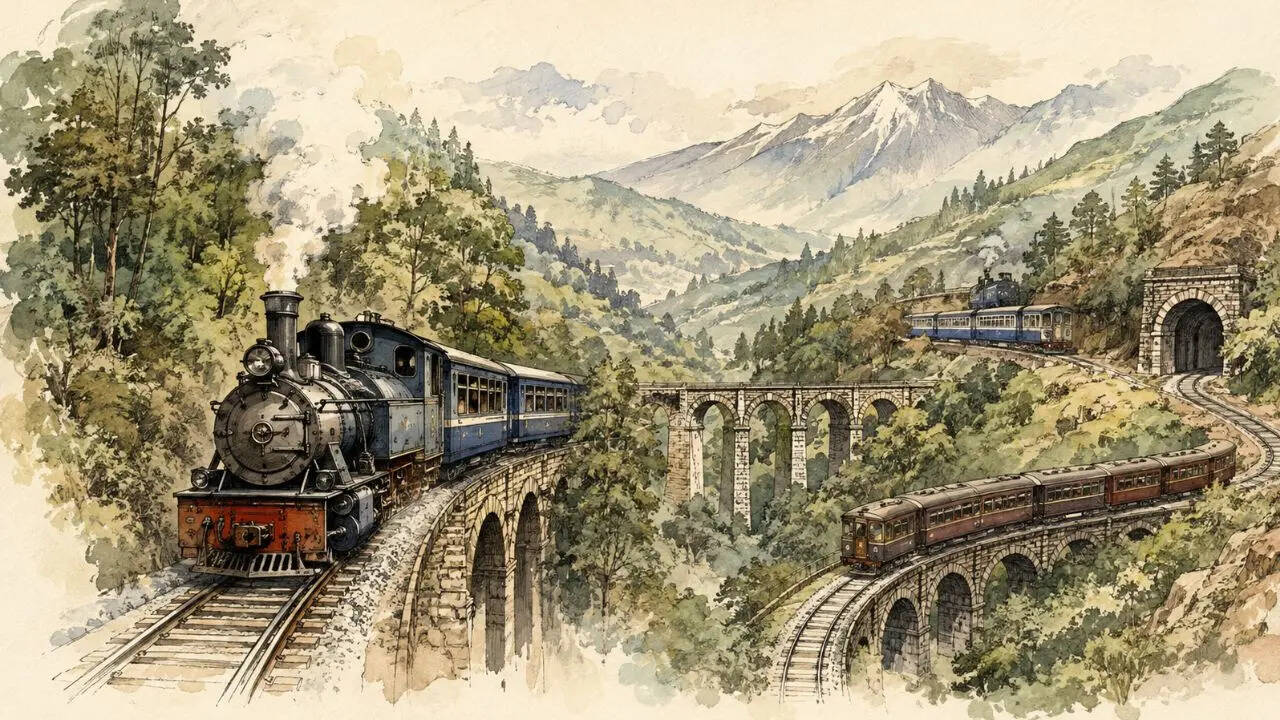
Affectionately known as the 'Toy Train', the Darjeeling Himalayan Railway (DHR) was the first in India to receive UNESCO recognition in 1999. Constructed between 1879 and 1881, this narrow-gauge railway is a marvel of engineering, climbing from the plains
of New Jalpaiguri to the hill station of Darjeeling. Spanning approximately 88 kilometres, the route ascends from about 100 metres to over 2,200 metres. What makes the DHR truly special are its ingenious engineering solutions, like the famous 'Z-loops' and zig-zags that help the train gain altitude on the steep mountain slopes. The journey treats passengers to breathtaking views of tea plantations, dense forests, and the majestic Kanchenjunga peak. A highlight is the stop at Ghum, India's highest railway station, which adds to the unforgettable charm of this historic ride.
The Nilgiri Mountain Railway
Journeying through the blue hills of Tamil Nadu, the Nilgiri Mountain Railway (NMR) connects Mettupalayam with the popular hill station of Ooty (Udhagamandalam). Added to the UNESCO list in 2005, its construction was a formidable challenge, starting in 1891 and completed in 1908. This railway is unique in India for its use of the 'rack and pinion' system, a special toothed track that allows the train to navigate the steepest slopes in Asia. Over its 46-kilometre journey, the train climbs from an elevation of around 326 metres to over 2,200 metres, passing through 16 tunnels, over 250 bridges, and around 108 curves. The rhythmic chug of the steam locomotive, combined with stunning vistas of rocky ravines and lush tea estates, makes this journey a truly immersive experience into a bygone era of engineering and travel.
The Kalka-Shimla Railway
The Kalka-Shimla Railway, inscribed as a World Heritage site in 2008, is a testament to the ambition of connecting the former summer capital of British India with the plains. Opened in 1903, this 96-kilometre narrow-gauge line traverses a rugged and beautiful route from Kalka in Haryana to Shimla in Himachal Pradesh. Known for its stunning panoramic views of the surrounding Himalayan foothills, the journey is an engineering spectacle. The train navigates an incredible 102 tunnels and crosses over 800 bridges and viaducts, offering a constantly changing landscape of quaint villages and dense pine forests. Ascending from 656 metres to over 2,076 metres, the ride is a gentle, winding journey that captures the romanticism of hill travel and remains a beloved way to reach the 'Queen of Hills'.