






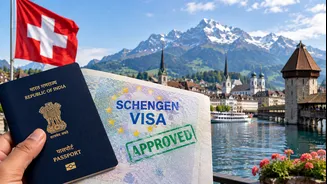
Dreaming of a European holiday? The first step is often the Schengen visa, and according to the latest data from 2025, where you apply can significantly impact your chances of success. Rejection rates for Indian travellers are not uniform.
The Big Picture: India's Visa Landscape
India has become
a powerhouse in global travel, ranking as the third-largest market for Schengen visas in 2025, just behind China and Turkey. Indian travellers lodged over 1.15 million applications for short-stay visas to Europe. Of these, approximately 967,000 were approved, while over 181,000 were rejected, resulting in a nationwide rejection rate of 15.8%. This figure is slightly higher than the global average rejection rate of 14.6%, indicating that Indian applicants face a bit more scrutiny than their worldwide counterparts. Despite the rejections, the high volume of applications and the fact that nearly 58% of issued visas were for multiple entries underscore the growing and recurring interest among Indians for European travel.
The Toughest Doors to Knock On
The data reveals a stark contrast in how different Schengen nations handle applications from India. Several countries post rejection rates significantly higher than the average. In 2025, Slovenia had the highest rejection rate for Indian applicants at a staggering 46.1%, meaning nearly one in every two applications was denied. Other countries with notably high refusal rates included Bulgaria (37%), Greece (33%), Malta (31.7%), and Estonia (30.1%). Even popular tourist spots like Greece, which received over 41,000 applications from India, rejected a third of them. These higher rates can sometimes be attributed to smaller consulates handling a large volume of applications or stricter scrutiny regarding the purpose of travel and financial documentation.
The Most Welcoming Consulates
On the other end of the spectrum, several countries demonstrated much lower rejection rates, making them statistically 'easier' gateways for Indian travellers. Denmark had the lowest refusal rate at just 6.9%, followed closely by Belgium at 7.7%. Germany, despite processing a massive volume of over 153,000 applications from India, maintained a low rejection rate of 10.5%. Similarly, Switzerland, the most popular destination for Indian Schengen applicants in 2025, had a relatively moderate rejection rate of 13.6%. Italy also proved to be a favourable option with a refusal rate of 12.7%. These figures suggest that larger consulates with more resources and established tourism or business ties with India may offer a smoother process.
Why Rejection Rates Vary So Widely
Several factors contribute to these dramatic differences. A primary rule is that you must apply to the consulate of your main destination—the country where you will spend the most time. This means you cannot simply 'shop' for the consulate with the lowest rejection rate. The discrepancies often come down to consular resources versus application volume, specific national immigration policies, and the economic and security concerns of the host country. Furthermore, the jurisdiction within India matters; in 2025, consulates in Bengaluru had an 8.2% refusal rate, while those in New Delhi averaged 18.7%, partly because Delhi handles applications for many of the smaller countries with higher rejection rates.
Tips for a Stronger Application
Regardless of where you apply, the strength of your application is paramount. The most common reasons for rejection are avoidable. These include inconsistencies across your documents, such as mismatched dates on flight bookings and hotel reservations. Another major red flag is suspicious financial activity, like sudden large deposits into a bank account just before applying. Visa officers need to be convinced of your 'intent to return' to India, which is proven through stable employment, property ownership, and family ties. Ensure your travel insurance meets the minimum €30,000 coverage for the entire Schengen area. A clear, logical itinerary and a well-written cover letter explaining the purpose of your trip can make a significant difference.