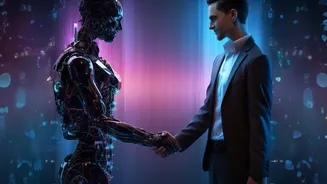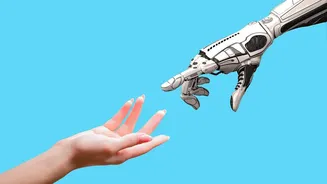







The rise of AI in the workplace often sparks fears of job replacement. But the reality is far more nuanced. Rather than a simple takeover, AI is acting as a powerful tool that redefines roles, especially in hiring, making human experience essential.
AI’s New Role on the Hiring Team
Artificial
intelligence is rapidly moving from a futuristic concept to a daily reality in human resources. A significant number of companies now use AI in their recruitment processes. This isn't about robots conducting final interviews. Instead, AI is primarily used to handle high-volume, repetitive tasks that can slow hiring down. These include screening thousands of resumes to find relevant keywords, scheduling interviews, and even using chatbots to answer initial candidate questions 24/7. The goal is efficiency. By automating the administrative burden, AI frees up human recruiters to focus on what they do best: building relationships, assessing cultural fit, and making strategic hiring decisions. This shift allows companies to process applications faster and potentially identify qualified candidates who might have been missed in a manual review.
The Limits of the Algorithm
For all its power in processing data, AI has significant blind spots. Algorithms are trained on historical data, which means they can inherit and even amplify past biases related to gender or background. A famous example involved Amazon scrapping a recruiting tool that showed bias against female candidates. Furthermore, AI struggles to evaluate the distinctly human qualities that are critical for success in any role. These include creativity, emotional intelligence, complex problem-solving, and the ability to collaborate effectively. An AI can confirm a candidate has 'management experience' on their resume, but it cannot gauge their leadership potential, their ability to mentor junior colleagues, or how they might handle a complex, unforeseen crisis. This is where the machine’s capabilities end and human judgment becomes irreplaceable.
Why Experience is Now a Premium
Counterintuitively, the rise of AI is making experienced professionals more valuable, not less. Recent data shows that companies adopting AI are expanding their senior-level workforce significantly faster than their junior-level one. One study found that roles requiring human judgment alongside AI automation are seeing twice the job growth and faster salary growth. The reason is clear: as AI handles routine execution, the value shifts to the work that surrounds it—framing the problem, evaluating the output, and taking responsibility for the final decision. Experienced staff possess the deep contextual knowledge and nuanced understanding that AI lacks. They have seen what works and what doesn't, not just in a dataset, but in the real world. This wisdom is crucial for guiding strategy, mentoring the next generation, and making the tough judgment calls that no algorithm can be programmed to handle. A recent report from IIT Madras highlighted that entry-level roles have historically served as apprenticeships; if AI automates these foundational tasks, companies must rethink how employees gain the judgment needed for senior positions.
The Human-AI Partnership in Action
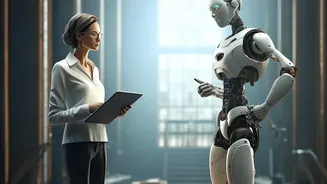
The most effective organisations are not building teams of humans versus machines, but fostering a 'human-plus-AI' workforce. In this model, AI acts as a cognitive partner, handling the data analysis, content generation, and pattern matching at a scale humans cannot. The human professional then provides the critical oversight. They question the AI's output, check for factual errors or biases, interpret the findings within a broader business context, and apply ethical reasoning. For example, an AI might shortlist the top 10 candidates based on skills, but the experienced hiring manager will conduct the interviews to assess personality, drive, and longterm potential. This collaborative approach allows businesses to leverage the speed and scale of technology without sacrificing the wisdom and accountability that only a human expert can provide.
The Skills for Tomorrow's Jobs
As AI reshapes job roles, the most in demand skills are evolving. While technical AI literacy is important, employers are increasingly seeking 'human' capabilities that AI cannot replicate. According to the World Economic Forum, skills like analytical thinking and creative thinking are top priorities for workforce training. As technology handles more routine tasks, the premium on creativity, critical thinking, communication, and leadership grows. The future of work isn't just about learning to use AI tools; it's about honing the very skills that make us human. For both new entrants and seasoned professionals in the Indian job market, which has seen a surge in AI related roles, continuous learning and adaptability will be key to thriving in an AI enabled economy.