



The Science of the Ticking Time Bomb
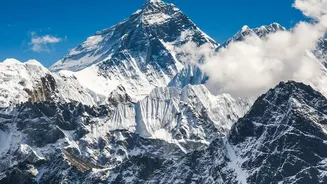
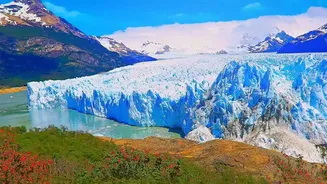
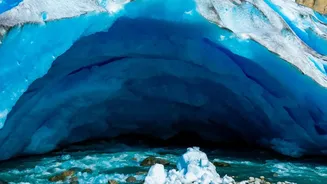
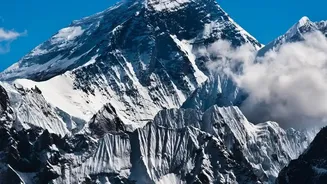
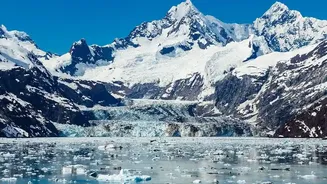
The core of the problem lies in the rapid melting of glaciers. As global temperatures rise, glaciers across the Hindu Kush Himalaya are losing ice at an accelerating pace—rates that have doubled since the year 2000. As these rivers of ice shrink, they
leave behind vast quantities of meltwater that collect in depressions, forming massive glacial lakes. These lakes are often held back by nothing more than unstable walls of moraine—loose rock and debris left by the retreating glacier. As the water pressure builds or the moraine dam is destabilised by an earthquake, avalanche, or even just heavy rain, the result can be catastrophic.
GLOF: A Mountain Tsunami
This sudden, violent failure of a glacial lake dam unleashes what is known as a Glacial Lake Outburst Flood, or GLOF. It's a mountain tsunami—a ferocious torrent of water, mud, ice, and boulders that thunders down narrow valleys at incredible speed, destroying everything in its path. Communities, bridges, roads, and crucial infrastructure like hydropower plants can be wiped out in minutes. The recent and devastating flood in Nepal's Rasuwa district on August 26, 2026, which claimed over a thousand lives, was triggered by the collapse of a glacier, creating a similar deadly surge. This event highlights the very real and immediate nature of this threat.
Nepal's Dangerous Hotspots
Nepal is uniquely vulnerable. Home to thousands of glaciers and over 2,000 glacial lakes, it sits on a geological and climatic knife-edge. The International Centre for Integrated Mountain Development (ICIMOD) has identified dozens of these lakes as being at high risk of a GLOF. A recent assessment identified 47 potentially dangerous lakes across Nepal, Tibet, and India that feed into the major river systems, with 21 of them located within Nepal itself. These 'ticking time bombs' are situated high in the mountains, directly upstream of villages, towns, and vital economic assets, making the country a hotspot for climate-induced disasters.
A Shared Crisis: The View from India
This is not just Nepal's problem. The Himalayas are the source of major river systems like the Ganga, Indus, and Brahmaputra that are lifelines for India. A major GLOF event in the upper reaches of the Koshi or Gandaki basins in Nepal could trigger transboundary floods with devastating consequences for downstream states like Bihar and Uttar Pradesh. The August 2026 flood saw victims' bodies carried as far as 240 km into India, a grim reminder of how interconnected the region's geography and disaster risks are. Scientists warn that the increasing instability of the entire Himalayan system, not just melting ice, poses a direct threat to India's communities, pilgrimage routes, and infrastructure.
Racing Against the Melt
Responding to this escalating crisis is a monumental challenge. Efforts are underway in Nepal to mitigate the risk. These include ambitious projects to carefully drain high-risk lakes, lowering their water levels to reduce pressure on the fragile moraine dams. Early warning systems are also being developed, combining satellite monitoring with on-the-ground sensors to provide downstream communities with precious minutes to evacuate. However, experts caution that these measures are not enough. The scale of the problem is immense, with new lakes forming faster than old ones can be secured. The recent disaster has highlighted gaps in preparedness and the inadequacy of infrastructure built for a climate that no longer exists.