

The Flour at the Forefront
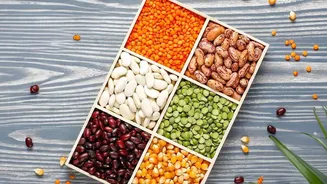
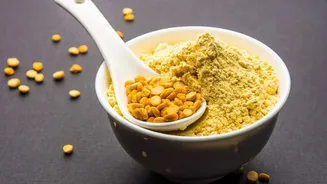
The hero ingredient behind fafda's unique texture is gram flour, known across India as besan. Made from ground chana dal (split Bengal gram), besan is fundamentally different from wheat flour. Its most important characteristic in this context is what
it lacks: gluten. Gluten is the protein network in wheat that creates elasticity and chewiness, perfect for bread but the enemy of a crispy snack like fafda. Because besan is naturally gluten-free, it doesn't form these chewy strands, allowing the final product to be short, brittle, and delightfully crisp. This high-protein, low-glycemic index flour provides the perfect foundation for a snack that shatters with every bite.
An Alkaline Ally
While besan is the star, it has a crucial supporting actor: an alkaline agent. Traditionally, this is 'papad khar,' a specific type of alkaline salt that is a key ingredient in many Indian snacks like papad and khichu. Papad khar works as a rising and crisping agent, giving fafda its light and crunchy texture. It raises the pH of the dough, which alters the properties of the flour and helps create a more delicate structure. For home cooks who can't easily find papad khar, baking soda is a common and effective substitute, performing a similar function to ensure the fafda isn't dense or hard.
The Art of the Dough
The right ingredients are only half the story; technique is paramount. The fafda dough must be kneaded meticulously for at least 7-10 minutes. This process, which often includes incorporating oil, develops a smooth, soft, and pliable dough that is crucial for the next step. Unlike bread dough, the goal here isn't to develop gluten, but to ensure the mixture is perfectly homogenous and elastic enough to stretch without breaking. After kneading, the dough is rested, allowing it to relax and making the shaping process more manageable.
Stretch, Press, and Fry
The most visually distinct part of making fafda is the shaping. A small, oval-shaped piece of dough is placed on a wooden board. Using the base of the palm, the cook presses and stretches the dough in a single, swift forward motion. This requires skill and practice to create a long, thin, and even strip. The strip is then carefully lifted off the board with a knife and immediately dropped into medium-hot oil. The frying is brief; the fafda is cooked until crisp but not overly browned, preserving its pale yellow colour. This quick fry in moderately hot oil is the final step in solidifying that signature snap.
A Cultural Crunch
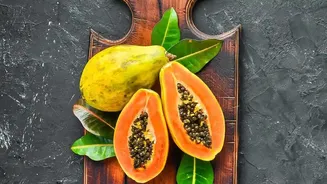
Fafda is more than just a snack; it's a cultural cornerstone in Gujarat. It's a breakfast staple, a popular street food, and an indispensable part of festival celebrations, especially during Dussehra. You'll often see long queues at 'farsan' (snack) shops on festive mornings. The classic way to enjoy fafda is with its perfect counterparts: sweet, syrupy jalebi, a tangy chutney made from besan, and a side of 'sambharo,' a quick pickle of grated raw papaya and fried green chillies. This combination of sweet, salty, spicy, and crunchy is a masterclass in balanced flavours and textures.