





Anatomy of an Electrified Lifeline
The entire system is officially called Overhead Line Equipment (OHE) or a catenary system. It’s more complex than a single wire. The main components include a messenger wire at the top and a contact wire below it, connected by vertical hangers or 'droppers'.
This structure ensures the contact wire remains nearly perfectly level, which is crucial for maintaining consistent contact with a moving train. This whole web is held up by masts and cantilever arms placed at regular intervals along the tracks. The term 'catenary' itself refers to the specific curve a hanging wire naturally forms, a principle harnessed here to provide stable, reliable power.
How the Power Makes the Journey
The process is a constant, moving electrical circuit. An apparatus on the train's roof, called a pantograph, pushes up against the contact wire with a carbon strip to collect electricity. This high-voltage power, typically 25,000 volts AC (25 kV AC) on mainline routes, flows into the train to power its motors and systems. The circuit is completed as the current returns to the substation through the train's metal wheels and the steel railway tracks, which act as the return path. To ensure the pantograph's carbon strip wears evenly, the contact wire is deliberately staggered in a slight zigzag pattern, rather than running in a perfectly straight line.
Why Overhead Wires Are a Top Choice
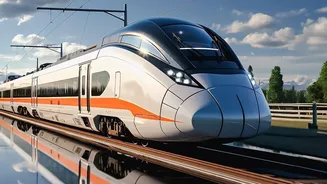
Overhead systems are ideal for mainline and high-speed rail for several key reasons. They can deliver very high voltages efficiently over long distances, which means power substations can be spaced farther apart, reducing infrastructure costs. This high-power delivery is essential for hauling heavy freight and accelerating long passenger trains quickly. Electric trains powered this way produce no direct emissions, making them a cornerstone of sustainable transport. Furthermore, modern electric trains can use regenerative braking, where the train's kinetic energy during braking is converted back into electricity and fed back into the overhead line, allowing other trains on the network to use it and improving overall energy efficiency.
The Indian Railways Electrification Mission
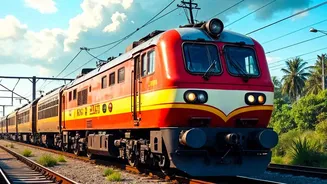
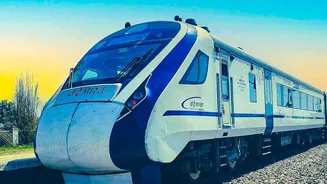
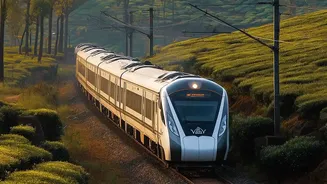
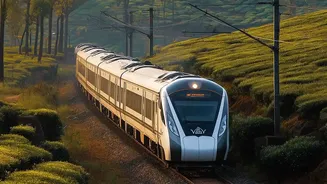
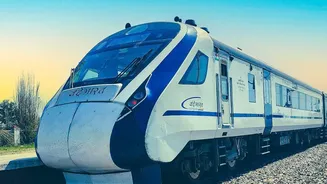
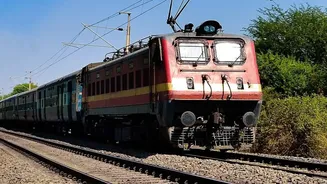
Indian Railways has been on a mission to electrify its entire broad-gauge network, a massive undertaking that is now nearing completion. As of late 2026, around 99.7% of the broad-gauge network has been electrified. This aggressive push has dramatically reduced the nation's reliance on imported diesel, saving foreign exchange and significantly cutting carbon emissions. The first electric train in India ran in 1925 in Mumbai, but the pace of electrification has accelerated dramatically in the last decade. By transitioning to electric traction, Indian Railways is not only modernising its fleet for faster and more efficient operations but is also making a huge contribution to India's climate goals, as rail transport emits significantly less carbon per passenger than road transport.
Challenges and the Road Ahead
While highly effective, OHE systems are not without their challenges. The initial installation is expensive and complex. The wires are also vulnerable to damage from extreme weather like high winds and storms, which can cause significant service disruptions. The visual impact of poles and wires can also be a concern in scenic or historic urban areas. For these reasons, some urban metro systems or lines in constrained tunnels use a 'third rail' system, where an electrified rail runs along the tracks. Other alternatives like battery-hybrid and hydrogen-powered trains are also emerging for routes where full electrification isn't feasible, but for the backbone of a national rail network, overhead wires remain the global standard.