



A Tale of Two Surfaces
Our planet gets its rain from two primary sources: evaporation from the vast oceans and evapotranspiration from land, which includes moisture released by soils and plants. For a long time, these two sources worked in a relatively stable balance. However,
climate change is rewriting this relationship. Recent research indicates a significant global trend: while evaporation from warmer oceans is accelerating, the contribution from land is declining. This doesn't mean less water overall in the atmosphere, but rather that the source of that water is becoming more dominated by the sea. This shift has profound implications for global weather patterns, affecting where, when, and how intensely rain falls.
Why Is Land Contributing Less?
The decline in land-based moisture is linked to a few key factors, one of which is a curious consequence of rising carbon dioxide (CO2) levels. Plants absorb CO2 for photosynthesis through tiny pores on their leaves called stomata. When CO2 is more abundant in the atmosphere, plants don't need to open their stomata as wide or for as long. This leads to a reduction in transpiration—the process of plants releasing water vapour. Essentially, some plants become more water-efficient in a high-CO2 world, keeping more water in their tissues and releasing less into the air. Additionally, in many regions, limited soil moisture, itself a consequence of changing rainfall and higher temperatures, puts a cap on how much water can evaporate from the land in the first place.
The Ocean's Growing Influence
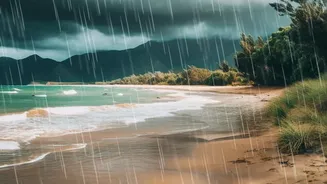
As the land's contribution wanes, the ocean's role grows. Oceans have absorbed over 90% of the excess heat trapped by greenhouse gases. This has led to a steady rise in sea surface temperatures. Warmer water evaporates more quickly, injecting huge amounts of additional moisture into the atmosphere. This process is supercharging the atmospheric engine, providing more fuel for weather systems. More water vapour in the air means there is greater potential for heavy precipitation. This shift makes oceanic conditions an even more critical driver of rainfall patterns on land, even for areas far from the coast.
The Impact: More Extreme Weather
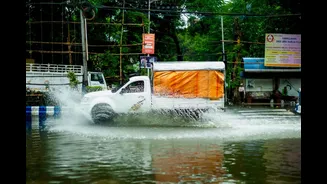
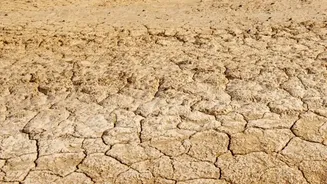
This rebalancing of the water cycle is a recipe for more extreme and erratic weather. With more moisture coming from the oceans, storms can become more intense, leading to heavier rainfall and increased flood risk in some areas. At the same time, regions that rely on recycled moisture from land can experience more frequent or severe droughts. The result is a world where the water cycle swings more violently between extremes—from deluge to drought. This increased volatility poses a significant challenge for everything from agriculture and city planning to water resource management.
What It Means for India's Monsoon
For India, where the economy and food security are deeply tied to the summer monsoon, these changes are critical. The monsoon is fundamentally driven by the temperature difference between the land and the sea. Warmer oceans, like the Arabian Sea and Bay of Bengal, can feed more moisture into the monsoon system, potentially leading to more intense and erratic rainfall events. Studies already show that for every degree of warming, monsoon rains are expected to increase by about 5%, becoming more chaotic. This aligns with the observed trend of extreme rainfall events increasing in frequency and intensity across the country. The growing dominance of oceanic moisture could make India's life-giving rains more volatile, creating a dual threat of devastating floods in some periods and prolonged dry spells in others.