





In the world of fitness, running and jumping rope are two of the most accessible and effective cardio workouts. But when the goal is specifically to improve coordination and the precise timing between your hands and feet, which one truly delivers?
The Rhythmic Foundation of Running
Running
is a fundamental human movement, and at its core, it's a masterful act of coordination. It requires the brain to orchestrate a complex sequence of muscle contractions across the lower body, core, and even upper body to maintain forward momentum and balance. The coordination built through running is primarily rhythmic and cyclical. Your arms swing in opposition to your legs to provide stability, and your core engages to prevent excessive rotation of the torso. This builds what experts call intermuscular coordination, where different muscle groups learn to work together harmoniously. Think of it as large-scale coordination. It enhances your body's proprioception—its innate sense of its position in space—which is crucial for navigating terrain and maintaining balance on a single leg with every stride. This type of coordination is foundational, improving the efficiency of your movement and creating a stable base from which more complex skills can be built. However, for most people, this movement is relatively natural and doesn't require the same level of conscious hand-foot timing as other activities.
Jump Rope: The School of Precision Timing
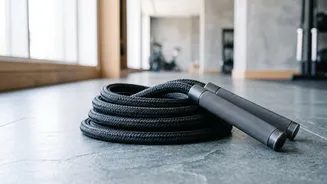
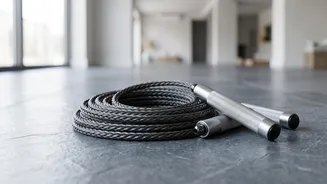
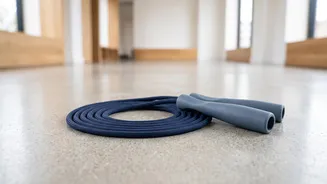
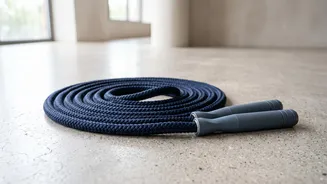
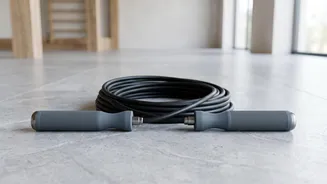
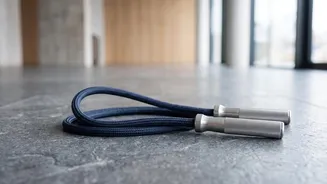
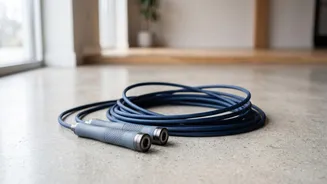
If running builds foundational rhythm, jumping rope teaches precision. It is an exercise that relentlessly demands perfect timing between your hands, eyes, and feet. Unlike running, where you can often get by with less-than-perfect form, a jump rope provides immediate, unavoidable feedback: if your timing is off, you trip. This constant feedback loop forces the nervous system to adapt quickly, creating strong neural pathways between your brain, wrists, and feet. The act of rotating the rope and clearing it with a jump, often just centimetres off the ground, develops fine motor skills, agility, and a high degree of spatial awareness. Research has shown that jumping rope significantly improves general motor coordination and balance. It trains the body to be light on the feet, making small, explosive, and controlled movements repeatedly. This is a different class of coordination—one based on reactive, quick-twitch timing rather than steady, cyclical motion.
Hand-Foot Timing: A Head-to-Head Comparison
When we focus specifically on hand-foot timing, the jump rope has a clear edge. The very nature of the exercise is to synchronise the circular motion of the hands with the vertical motion of the feet. Running involves coordinated movement of all four limbs, but the hands and feet are working in opposition to maintain balance, not in precise, timed synergy to complete a single task. Jumping rope, on the other hand, is a unified effort. Your hands dictate the rhythm that your feet must follow. This makes it a superior tool for athletes in sports like boxing, martial arts, tennis, or cricket, where rapid footwork must be perfectly synchronised with hand and upper-body movements. Studies on athletes, including volleyball and soccer players, have demonstrated that incorporating jump rope training leads to measurable improvements in coordination, balance, and proprioception. While running improves your body's overall coordinated movement, jumping rope hones the specific, high-speed connection between what your hands are doing and what your feet need to do in response.
Making the Choice: A Complementary Approach
So, should you throw away your running shoes and only jump rope? Not necessarily. The best approach often involves using both exercises to develop a more complete athletic profile. Running builds cardiovascular endurance and the foundational, large-scale coordination necessary for sustained activity. It strengthens your ability to maintain form and efficiency over long durations. Jumping rope builds the explosive power, agility, and high-precision neuromuscular control that can make you a more dynamic and reactive athlete. Many runners incorporate jumping rope into their routines as a warmup or cross training tool to improve their foot speed and running economy while reducing the risk of injury. Jumping rope can strengthen the calf muscles and improve the elasticity of tendons in the lower leg, which is beneficial for runners. Think of running as building the engine and the chassis of a car, while jumping rope fine tunes the steering and suspension for high performance handling. They are not mutually exclusive; they are complementary tools for building a better moving body.