





Understanding Gochujang's Magic
At the heart of this dish is gochujang, a staple of Korean cooking. This thick, crimson paste is not just a simple hot sauce; it’s a fermented condiment with a deeply complex flavour profile. Made from red chili powder, glutinous rice, fermented soybean
powder, and salt, it delivers a multifaceted taste experience: savoury umami from the soybeans, a subtle sweetness from the rice starches breaking down during fermentation, and a satisfying, lingering heat from the chilies. This combination of sweet, savoury, and spicy makes it an incredibly versatile base for sauces, marinades, and stews. Its flavour is concentrated, so a little goes a long way in providing depth that simple heat alone cannot achieve.
The Secret to Truly Crispy Tofu
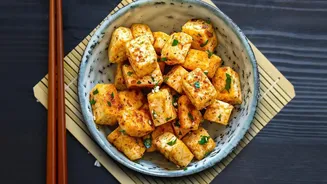
For this bowl to truly shine, the tofu’s texture is paramount. Mushy tofu can ruin the experience, which is why crisping it separately is a non-negotiable step. The journey to perfectly crisp tofu begins with removing as much water as possible. Start with extra-firm tofu and press it for at least 10-15 minutes by placing it between paper towels and weighing it down with something heavy. Once pressed, tear or cube the tofu. Tearing it creates more craggy, uneven surfaces that get extra crispy. The next step is a light coating, usually with cornstarch, which helps create a dry exterior that fries up beautifully. You can pan-fry, bake, or air fry the tofu pieces until they are golden brown and audibly crunchy on all sides. This separate cooking process ensures the tofu develops a firm, pleasing crust that can stand up to the sauce later.
Building a Balanced Gochujang Sauce
While gochujang is the star, it needs a supporting cast to temper its intensity and round out the flavour. A great sauce for a tofu bowl is about balance. Start by whisking gochujang with a few other key ingredients. Low-sodium soy sauce or tamari adds another layer of savoury umami and saltiness. A touch of sweetness, from maple syrup, honey, or brown sugar, complements the fermented notes of the paste. To brighten everything up, a splash of rice vinegar provides a gentle acidity. Finally, minced garlic and grated ginger introduce aromatic pungency, while a dash of sesame oil lends its signature nutty aroma. This mixture is typically warmed gently in a skillet to allow the flavours to meld before the tofu is introduced.
The Art of Assembling the Bowl
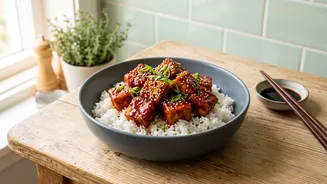
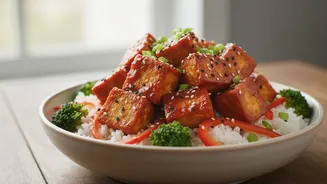
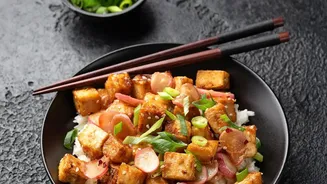
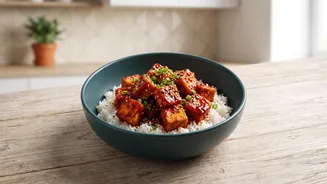
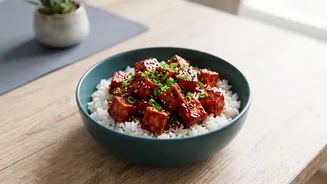
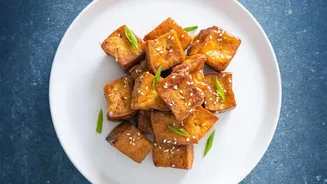
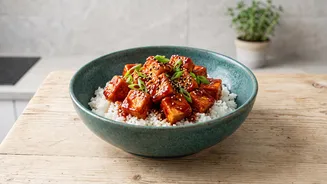
With your two main components prepared, assembly is the final, creative step. The foundation is a bed of fluffy steamed rice, which serves as the perfect neutral canvas. Now, add your vegetables. The options are nearly endless and provide an opportunity to add freshness, colour, and more texture. Quick-pickled cucumbers or carrots add a tangy crunch, while steamed broccoli, edamame beans, or sautéed spinach bring earthy notes and nutrients. Don't shy away from other Korean staples like kimchi for an extra punch of fermented flavour. Once your base and veggies are in place, it’s time for the main event. Add the crispy tofu to the warm sauce, tossing it just long enough to get a generous, even coating. This last-minute combination is crucial—it ensures the tofu is gloriously saucy on the outside but still delightfully crisp on the inside when you take your first bite. Garnish with toasted sesame seeds and sliced green onions for a final flourish.