









The War on Spam: A Quick Recap
For years, TRAI has been locked in a battle against Unsolicited Commercial Communication (UCC), the official term for spam calls and messages. To combat this, they introduced a powerful framework requiring telemarketers to register on a blockchain-based
system known as Distributed Ledger Technology (DLT). This platform was designed to ensure transparency, allowing only registered businesses with approved message templates to contact customers. Furthermore, specific number series were created to help users identify call types: the 140 series for promotional calls and the 1600 series for service or transactional communications, like bank alerts and delivery updates. The goal was to make it easy to separate legitimate business communication from fraudulent or unwanted calls.
The System's Blind Spot
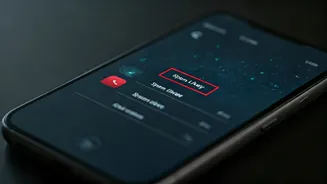
Despite these efforts, the problem has become more complex. Aggressive spam filtering, both by telecom operators using AI and by popular third-party caller ID apps, has created a new issue: false positives. These systems often rely on crowd-sourcing and algorithms to identify spam. If enough users mark a number as spam, it gets flagged for everyone, even if it's a legitimate business trying to make contact. This has led to a situation where verified calls from the official 1400 and 1600 series, which should be trusted, are being incorrectly labelled as 'spam' or blocked entirely. TRAI has pointed out that this automated and sometimes arbitrary blocking disrupts essential communication and undermines the very system created to manage it.
Business and Consumer Crossfire
The consequences of this over-correction are significant. For consumers, it can mean missing an urgent call from a bank, a delivery confirmation, an appointment reminder from a hospital, or a one-time password (OTP). When two out of every three unknown calls are potentially labelled as spam, users naturally become conditioned to ignore them, leading to missed critical information. For businesses, the impact is direct and damaging. Lower call answer rates lead to lost sales, failed customer engagement, and increased operational costs from repeated call attempts. If businesses lose faith in the designated commercial phone lines because their calls aren't getting through, they may revert to using regular 10-digit mobile numbers, which would only increase confusion and make it harder to distinguish real calls from actual spam.
TRAI's New Regulatory Push
Recognizing this problem, TRAI is now taking a two-pronged approach. First, it is seeking more power to regulate the third-party caller ID apps. Currently, apps like Truecaller and others operate as IT intermediaries, placing them outside TRAI's direct authority. The regulator has requested powers under the IT Act to hold these platforms accountable for wrongly flagging legitimate calls from the 1400 and 1600 series. Second, TRAI is pushing for the nationwide implementation of a new Digital Consent Acquisition (DCA) system. This initiative aims to create a unified, digital platform where customers can give, manage, and revoke their consent for receiving commercial communications from businesses in a transparent way. This would create a single source of truth for consent that all telecom operators can verify.
What Happens Next?
The path forward involves a delicate balancing act. Granting TRAI authority over caller ID apps could significantly change how spam is policed in India, forcing these platforms to align with national telecom regulations. Meanwhile, the success of the Digital Consent Acquisition (DCA) framework will depend on its adoption by businesses and the ease with which consumers can manage their preferences. A pilot for the DCA has already been launched with major banks to test its feasibility before a wider rollout. Ultimately, the goal is to refine the system so that it can intelligently filter out genuine fraud and nuisance without penalizing the legitimate businesses that form the backbone of the economy. This will require closer collaboration between regulators, telecom operators, digital platforms, and the businesses themselves.