




A Surprising New Measurement
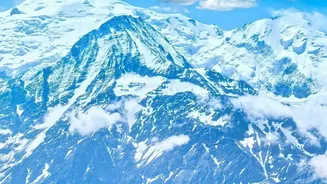
A team of surveyors from France's Haute-Savoie department announced the new height of Mont Blanc on October 14, 2026, following their biennial measurement expedition. The peak now stands at 4,807.47 metres. This marks a significant gain of 1.88 metres from the 2023
measurement of 4,805.59 metres, which was a recent low. The measurement, taken in September, reverses a downward trend observed in previous years, bringing the summit's height closer to levels seen at the turn of the century. As chief surveyor Jean des Garets noted, the summit is in constant motion, and these regular check-ups provide a crucial long-term dataset on the mountain's behaviour.
The Tale of Two Summits
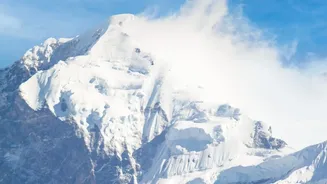
The key to understanding this fluctuation lies in a simple fact: Mont Blanc has two summits. There is the permanent, solid rock peak, which sits stable at an altitude of about 4,792 metres. Then there is the 'white' summit, a thick cap of ice and snow that sits on top of the rock. This snowy dome is what surveyors actually measure, and its thickness changes from year to year. The overall height of Mont Blanc is dictated entirely by how much snow and ice is piled on its stony shoulders. This snowy layer can vary in thickness by 15 to 20 metres, making the mountain's official height a dynamic figure.
Why Did the Snowpack Grow?
The growth isn't due to any geological uplift but rather to weather patterns over the past couple of years. The height of the ice cap is determined by two main factors: how much snow accumulates in winter and how much of it melts during the summer. The recent increase suggests that precipitation was more significant or summer melting was less severe than in preceding years. Wind also plays a major role, redistributing snow across the summit. A year with heavier snowfall and a cooler, less prolonged summer can 'build up' the summit, leading to a higher measurement. Conversely, a hot summer and low winter snowfall, like the conditions that led to the 2023 low, cause the summit to shrink.
Does This Defy Climate Change?
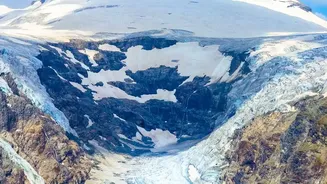
It's tempting to see a growing ice cap as good news, but experts are quick to add context. Glaciologist Luc Moreau and others caution that this single measurement does not contradict the broader, alarming trend of glacial retreat across the Alps. The experts stress the difference between a fluctuation in the summit's surface altitude and the overall ice mass of the mountain's glaciers. At lower altitudes, glaciers like the Mer de Glace are melting at a dizzying pace, losing significant thickness and length. The high-altitude ice cap above 4,200 metres has been more stable historically, but it is not immune. While this year's growth is a fascinating meteorological event, the long-term forecast for Alpine glaciers remains dire, with scientists predicting the disappearance of many by the end of the century.
The Science of Measurement
Measuring a mountain is a complex and physically demanding task. For over two decades, surveyors have made the trek every two years. The expedition team, consisting of about two dozen people, carries nearly 30 kilograms of equipment to the summit. They use high-precision satellite technology (GNSS) to get an exact reading of the highest point. In recent years, drones have also been used to create a detailed 3D model of the entire ice cap. This allows scientists to not only know the height but also to model the volume and shape of the summit's snow, providing invaluable data for tracking changes over time.