




More Than Just a Dish
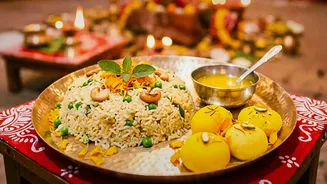
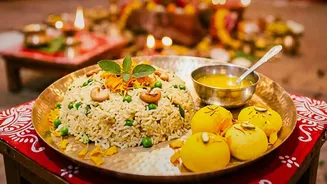
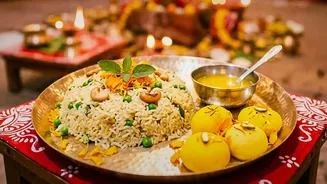
At first glance, Bhoger Khichuri seems simple. It's a one-pot meal of rice and lentils, often with seasonal vegetables. But during Durga Puja, this comforting dish transforms into something sacred. The term 'bhog' refers to a food offering made to a deity,
which is later distributed as 'prasad'—a blessed meal shared by devotees. This khichuri is specifically prepared as 'niramish', meaning it is purely vegetarian and contains no onion or garlic, adhering to Sattvic principles suitable for a divine offering. Its preparation is a ritual in itself, cooked with immense care and the best available ingredients as a mark of devotion to the Goddess Durga.
The Soul of the Recipe
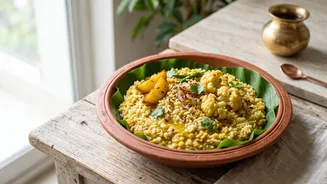
What sets Bhoger Khichuri apart from its everyday counterpart is its distinct aroma and flavour, achieved through a few key steps. The soul of the dish comes from two specific ingredients: Gobindobhog rice, a short-grain, aromatic variety, and Sona Moong dal. A crucial part of the process is dry-roasting the moong dal until it releases a nutty, golden fragrance. This not only imparts a signature taste but also gives the dish its other name, 'Bhaja Muger Daler Khichuri'. The rice and roasted lentils are then slow-cooked with vegetables like potatoes, cauliflower, and green peas, and tempered with whole spices like bay leaves, cinnamon, and cloves in ghee and mustard oil. The result is a fragrant, slightly sweet, and deeply satisfying meal.
A Taste of Community and Equality
Perhaps the most significant role of Bhoger Khichuri is its power to unite. On Maha Ashtami, the eighth day of the festival, thousands gather at community pandals, waiting patiently in line to receive their portion, often served on traditional leaf plates. In that moment, all distinctions of class and status dissolve. Everyone, from the puja organiser to the visiting devotee, shares the same meal, side by side. This act embodies the egalitarian spirit of 'sarbojonin' or community Durga Pujas. The khichuri itself serves as a metaphor: just as rice, lentils, and vegetables merge into one harmonious dish, the community comes together, united by faith and food.
The Complete Bhog Experience
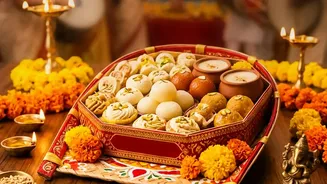
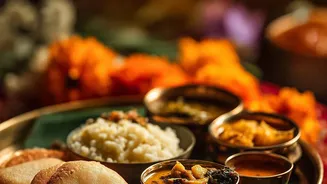
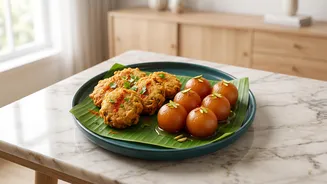
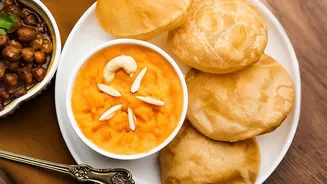
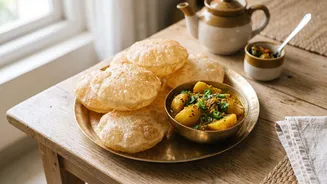
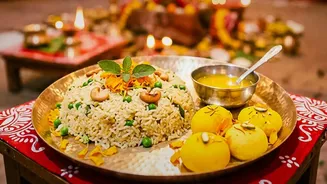
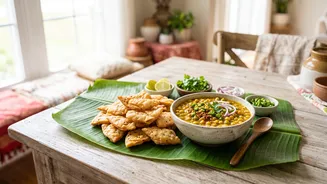
While Khichuri is the star, it is rarely served alone. A traditional Bhog platter is a symphony of complementary flavours and textures. Common accompaniments include 'labra', a soft-cooked medley of mixed vegetables; 'begun bhaja' (fried eggplant slices); and various other fried vegetables or fritters. A sweet and tangy tomato chutney often provides a delightful contrast, while a dessert like 'payesh' (rice pudding) or other Bengali sweets completes the divine meal. This entire spread, consumed together, is not just food; it is an experience that connects Bengalis to their roots, no matter where in the world they are.