






The Quarter-Million Truck Dream
From the moment it was unveiled in 2019, the Cybertruck was framed by Tesla CEO Elon Musk as a revolutionary product. Accompanying its radical design was a bold production target: the capacity to build 250,000 units per year. This quarter-million figure
became a benchmark, a symbol of Tesla's intent to conquer the lucrative American pickup truck market. Musk suggested this milestone could be hit as early as 2025, painting a picture of overwhelming demand being met by an unstoppable manufacturing machine. It was a vision that captured the imagination of investors and the public, leading to a massive number of initial reservations.
A Sharply Contrasting Reality
Years after that initial announcement, the production and sales figures tell a very different story. Far from reaching a quarter-million units, the Cybertruck's performance has been dramatically more modest. In its first full year of 2024, around 39,000 units were sold. Sales then saw a significant drop in 2025, falling by nearly half to just over 20,000 units. The trend continued into 2026, with the first quarter hitting a record low of just over 3,500 deliveries. This steep decline has led some analysts to make unfavorable comparisons to historic automotive flops like the Ford Edsel, which also failed to meet its own lofty sales projections in the 1950s.
Why the Production 'Grave'?
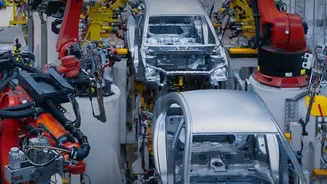
Elon Musk himself has been candid about the immense difficulties, famously stating that Tesla "dug its own grave with Cybertruck" due to its complexity. The primary challenges stem from the very things that make the vehicle unique. Its exoskeleton, made of a hard-to-bend stainless steel alloy, required inventing entirely new manufacturing techniques. Furthermore, the truck relies on Tesla's bespoke 4680 battery cells, and ramping up production of these has been a significant bottleneck. Reports have indicated that at times, the rate of battery production was only enough to power a small fraction of the 250,000-vehicle annual target, leading to inconsistent worker schedules and production slowdowns.
Is It Demand or Supply?
While production struggles are a clear factor, the narrative around demand is more complicated. The initial price was much higher than the $39,900 figure first mentioned in 2019. However, when Tesla briefly offered a lower-priced Dual Motor version for under $60,000 in early 2026, the response was overwhelming. Delivery estimates for new orders quickly jumped from mid-2026 to early 2027, suggesting that a significant backlog of orders accumulated in a very short time. This indicates that price-sensitive demand is still strong, but the company's ability to produce the vehicle at a profitable scale remains the core issue. The sales decline in 2025 and 2026 occurred while higher-priced models were the main option available.
The Road Ahead for Cybertruck
The Cybertruck's story is now a key part of a broader, more challenging period for Tesla, which has faced pressure on its stock price and profitability amid heavy spending on other future-facing projects like AI and robotics. The gap between the 250,000-unit vision and the on-the-ground reality of roughly 20,000 sales in 2025 is stark. While a recent order backlog for a cheaper model shows a flicker of hope, the fundamental manufacturing hurdles remain. Analysts suggest the Cybertruck is more likely to fade from prominence than be abruptly discontinued, perhaps with redesigns or new variants to try and revive interest. For now, the revolutionary truck serves as a powerful case study in how even the most ambitious visions can collide with the unforgiving realities of manufacturing at scale.