




A Sombre Midnight Session, Not a Public Rally
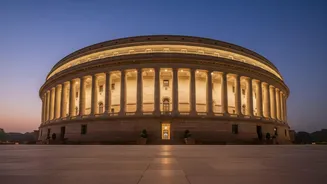
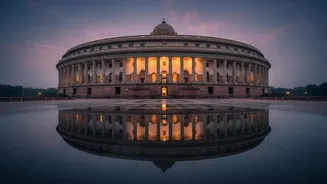
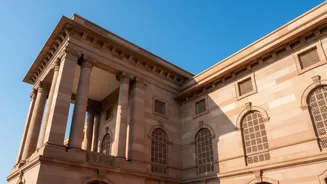
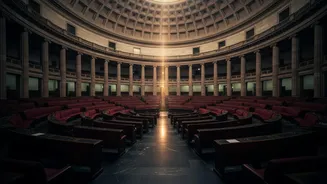
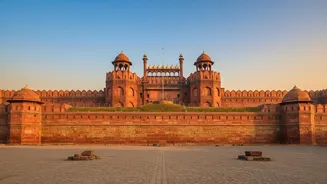
The iconic speech was not delivered from the Red Fort to a massive public crowd. That tradition had not yet begun. Instead, Nehru addressed the Constituent Assembly inside the brightly lit Parliament House (then known as the Constitution Hall) just before
midnight. The occasion was a formal, solemn transfer of power. The session began at 11 p.m. with the singing of Vande Mataram by Sucheta Kripalani, followed by speeches and a moment of silence for those who died during the freedom struggle. Nehru's address was part of a constitutional proceeding that marked the Assembly's transition into a sovereign legislative body for a newly independent nation.
A Nation Born Amidst Flames
The most powerful and tragic context of the speech was the Partition. As Nehru spoke of destiny and a new dawn, the subcontinent was being torn apart. Communal violence was raging across Punjab and Bengal, leading to one of the largest and most violent migrations in human history. Millions were displaced, and an estimated 750,000 people lost their lives. Nehru himself acknowledged this grim reality in his speech, noting that “our hearts are heavy with the memory of this sorrow” and that some of the pains continued even then. The hopeful words were a deliberate counter-narrative to the horror unfolding just outside the capital, which was itself flooded with refugees.
The Deliberate Choice of Hope Over Despair
Faced with immense tragedy, Nehru made a conscious choice to frame the moment in terms of hope, responsibility, and future-building. The phrase “tryst with destiny” refers to a long-held promise with fate that was finally being redeemed. Rather than dwelling on the violence or the administrative chaos, he focused on the immense task ahead: ending “poverty and ignorance and disease and inequality of opportunity.” It was a strategic act of leadership, designed to inspire the new nation's representatives and set a constructive, forward-looking agenda. He was calling on them to rise above “petty and destructive criticism” and build a “noble mansion of free India where all her children may dwell.”
The Pledge That Followed the Speech
What is often forgotten is what happened immediately after the speech. Nehru moved a resolution, and all members of the Constituent Assembly stood up after the final stroke of midnight to take a pledge. They dedicated themselves “to the service of India and her people and to the still larger cause of humanity.” This act transformed the poetic sentiments of the speech into a formal, collective commitment by the architects of the new state. It underscored that freedom was not merely an achievement to be celebrated, but a profound responsibility to be shouldered by all.
Gandhi's Noteworthy Absence
The man Nehru called the “greatest man of our generation” was conspicuously absent from the celebrations in Delhi. Mahatma Gandhi was in Calcutta (now Kolkata), attempting to quell the fierce communal riots that had engulfed the city. Instead of celebrating, he spent August 15, 1947, fasting and praying for peace between Hindus and Muslims. His absence served as a stark and poignant reminder of the unfulfilled dream of a united, harmonious India, a mission that he felt was more critical than attending the official ceremonies of a freedom he had fought so hard to win.