






At first glance, the silent stillness of a yoga studio and the focused tension of an archery range seem worlds apart. Yet, both disciplines are profound journeys into the heart of concentration, using posture and precision to tame a wandering mind.
The Shared Quest for a Quiet Mind
Both
yoga and archery are meditative practices that demand an exceptional level of focus. The ultimate goal in each is to achieve a state of 'flow,' where the mind is fully absorbed in the present moment, free from the clutter of internal chatter and external distractions. In this state, action becomes effortless and precise. However, the paths they take to arrive at this mental clarity are fundamentally different. Yoga guides awareness inward, exploring the body's internal landscape, while archery channels that same awareness outward toward a single, distant point.
Yoga: Concentration Through Inner Awareness
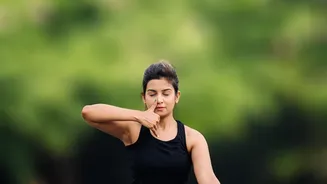
Yoga's approach to concentration is built from the inside out. The practice uses asanas (physical postures), pranayama (breathing techniques), and meditation to cultivate what is known as interoception—the awareness of the body's internal state. Poses like Tree Pose (Vrikshasana) or Eagle Pose (Garudasana) are not just physical exercises; they are tools that force the mind to focus on balance, alignment, and subtle bodily sensations to maintain stability. This physical challenge sharpens mental discipline. According to yogic philosophy, this practice of one-pointed focus is called Dharana, where attention is deliberately held on a single object, such as the breath or a point within the body. With sustained practice, this effortful concentration can evolve into Dhyana, a state of effortless meditation where the sense of separation between the practitioner and their point of focus begins to dissolve. The posture itself becomes a vehicle for turning the senses inward, calming the nervous system and creating the stillness required for deep concentration.
Archery: Precision Through External Focus
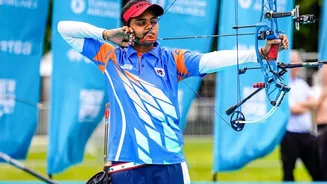
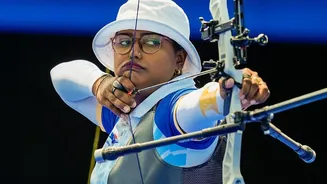
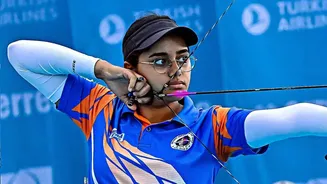
Archery, in contrast, is an exercise in exteroception—the perception of stimuli outside the body. The archer's concentration is directed entirely toward an external target. The entire practice is engineered to achieve a single, measurable outcome: hitting the bullseye. This demands a different kind of mental discipline, one rooted in process and repetition. An archer must execute a precise sequence of movements—stance, grip, draw, anchor, release—with unwavering consistency, shot after shot. The mind must remain locked on the target, ignoring distractions like wind, the score, or self-doubt. Any lapse in this external focus directly impacts the arrow's flight. Visualization is a key technique, where archers mentally rehearse a perfect shot before even drawing the bow, preparing the mind for the physical act and reducing performance anxiety.
Posture: A Foundation for Stillness
In both disciplines, a stable posture is the non_negotiable foundation for concentration. An archer's stance is about creating a solid, repeatable platform. The body must be perfectly aligned—feet firmly planted, torso upright, shoulders low—to ensure that the energy of the bow is transferred efficiently and consistently to the arrow. Any instability or misalignment in posture will compromise accuracy, forcing the archer to compensate and breaking their focus. Similarly, in yoga, asanas are designed to create stability and stillness. Postures like Mountain Pose (Tadasana) or Lotus Pose (Padmasana) train the body to be steady, which in turn quiets the mind. For the yogi, the posture is an end in itself—a container for awareness. For the archer, the posture is a means to an end—a rigid frame to ensure the arrow flies true.
Precision of Mind vs. Precision of Action
The core difference lies in the application of precision. In yoga, precision is internal. It's about the precise alignment of a pose to open a channel of energy, the subtle control of breath to calm the mind, or the meticulous focus required to enter a meditative state. The feedback is felt, not seen. Success is a state of being, a sense of inner harmony and quietude. In archery, precision is external and empirical. The feedback is immediate and visible on the target face. Success is a tight grouping of arrows in the center. While an archer's mind must be calm, that calmness is channeled into a highly specific, goal_oriented action. It’s a concentration that culminates in a moment of decisive release, whereas a yogi’s concentration is a continuous state of abiding awareness.