

A New Look at a Cosmic Lion
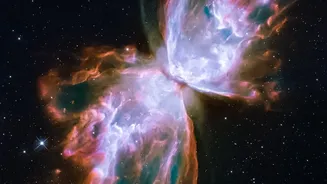
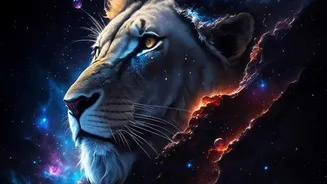
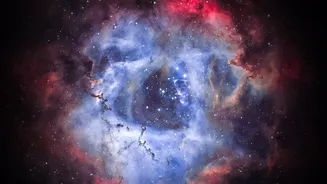
The target of Webb's latest observation is NGC 2392, a celestial object nicknamed the Lion Nebula because of its resemblance to a lion's face and mane. Located thousands of light-years from Earth, it is a planetary nebula—a vast, expanding shell of gas
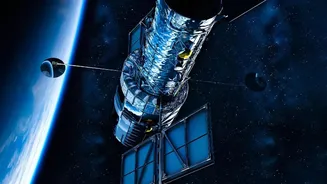
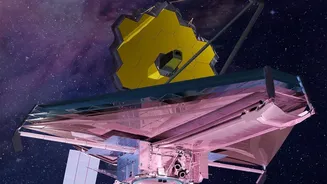
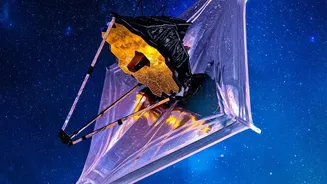
and dust ejected from a star similar to our Sun as it reached the end of its life. While the Hubble Space Telescope previously imaged this object, Webb's powerful infrared instruments, NIRCam and MIRI, have pierced through the haze to uncover hidden details. These new observations provide the clearest view yet of the complex environment sculpted by the dying star at its centre.
The Story Written in Dust
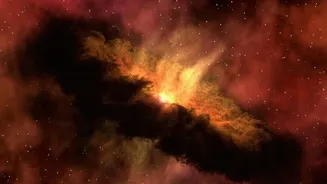
At the heart of the discovery are the fine structures of dust that form the nebula's spectacular 'mane'. Webb's infrared capabilities are perfectly suited to detecting these faint, cool materials. The images show not just a uniform cloud, but distinct rings and dense clumps of dust surviving within the chaotic environment. These are not the kind of star-forming regions seen in 'stellar nurseries'; instead, this is cosmic recycling in action. The dust is composed of heavier elements forged inside the star over billions of years and then cast out into space. In a way, we are looking at the raw ingredients for future stars and planets, but these ingredients are currently being blasted by intense radiation from the star's hot, exposed core, known as a white dwarf.
Rings and Clumps Explained
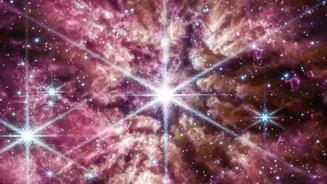
So, what do these features tell astronomers? The rings are likely shells of material ejected in pulses as the star became unstable in its final phases. The process is similar to how a Wolf-Rayet star system, like WR 140, creates concentric dust rings, with each ring marking a periodic event. In the Lion Nebula, the white dwarf's powerful stellar winds and radiation are constantly shaping these shells. The dense clumps are even more fascinating. These are knots of dust that have managed to survive the destructive blast from the central star. These clumps act like shields, protecting the material behind them from being completely eroded away. Studying the size and distribution of these clumps, sometimes called Bok globules in other contexts, helps scientists understand the forces at play within the nebula and how much material will ultimately be returned to the interstellar medium to form new celestial bodies.
Why Webb's View is Different
The reason the James Webb Space Telescope can see these structures so clearly is its ability to see in infrared light. While Hubble's visible light images show the glowing, ionized gas that looks like a lion's face, Webb sees the cooler, fainter dust that makes up the 'mane'. This dust is where the complex chemistry happens. The infrared view reveals the distribution of different materials, showing how the central star’s radiation is destroying some dust while other regions remain dense and shielded. By comparing the views from both telescopes, astronomers get a more complete three-dimensional picture of the nebula's structure and the processes that have been shaping it for thousands of years.