








An Unprecedented Find
On September 8, 2026, villagers and forest officials in the Balasore district of Odisha made a startling discovery: five juvenile orangutans abandoned in a casuarina plantation. These animals, all less than a year old, are native to the rainforests of Borneo
and Sumatra, thousands of kilometres away. Their presence in India immediately raised red flags among wildlife experts and authorities, pointing not to a new native species, but to a sinister international wildlife trafficking network. The Indonesian government has since become involved, coordinating with Indian authorities to investigate the animals' origins and facilitate their eventual return. The infant apes are now being cared for in quarantine at the Nandankanan Zoological Park in Bhubaneswar, but their journey has cast a harsh spotlight on India's growing role as a destination for the illegal pet trade.
A Symptom of a Larger Crisis
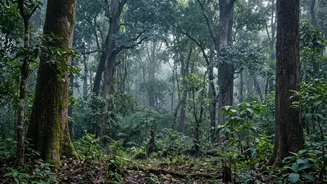
While the orangutans are the headline-grabbers, their story is a symptom of a much deeper problem plaguing Odisha: the degradation of its precious forest ecosystems. The state's forests, rich in biodiversity, are under immense pressure from multiple fronts. According to a recent central government report, over 12,700 hectares of forest land were diverted for non-forest use in Odisha between 2021 and 2026. This habitat loss is primarily driven by mining for minerals like coal and iron ore, which are often located in densely forested areas, and the expansion of infrastructure projects that fragment once-contiguous wildlife corridors. This fragmentation isolates animal populations, leading to increased human-wildlife conflict and making it easier for poachers and traffickers to operate along these new routes.
Odisha's Real Natural Treasures
The focus on the exotic orangutans should not overshadow the incredible, and often threatened, wildlife that is native to Odisha. The state's protected areas, like Simlipal National Park, are biodiversity hotspots. Simlipal is home to a unique population of melanistic or 'black' tigers, Asian elephants, leopards, and a vast array of other species. Beyond the tigers, coastal areas like Gahirmatha Beach host the world's largest mass nesting site for Olive Ridley turtles, an annual event known as the 'arribada'. From the Irrawaddy dolphins of Chilika Lake to the pangolins and sloth bears of its inland forests, Odisha's ecosystems are a vital part of India's natural heritage. The threats of habitat loss, poaching, and climate change put all of these species at risk.
The Community Conservation Model
Fortunately, there is a powerful force working to protect these forests: the local communities themselves. Across Odisha, particularly in districts like Nayagarh, a grassroots conservation movement has taken root. Practices like 'Thengapalli', where villagers take turns patrolling the forests with sticks, have revived hundreds of acres of degraded land. Women have been at the forefront of this movement, forming protection committees and asserting their community's rights over the forests they depend on. These community-led initiatives have proven to be incredibly effective, demonstrating that empowering local and indigenous people is one of the most successful strategies for conservation. These groups are not just protecting trees; they are safeguarding a way of life and a deep, cultural connection to the natural world.