


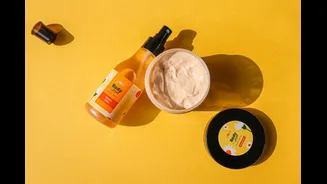


What Oil Actually Does For Your Hair
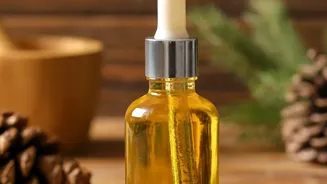
Think of hair oil as a protective shield and a finishing gloss. Its primary job is to seal the hair's outer layer, the cuticle. When the cuticle is smooth and flat, your hair reflects more light, appearing shiny and feeling soft. Oils are rich in fatty
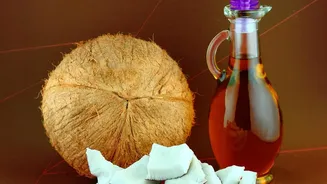
acids which help replace lipids within the hair shaft that are lost to styling, pollution, and chemical treatments. This lubrication reduces friction between strands, which means less tangling and breakage when you brush. Certain oils, like coconut oil, have molecules small enough to penetrate the hair shaft, which helps reduce protein loss during washing. A scalp massage with oil also boosts blood circulation, delivering more oxygen and nutrients to the follicles, which supports the overall scalp environment.
The Limits of an Oil-Only Approach
Despite its many benefits, hair oil is not a miracle cure. One of the biggest misconceptions is that oil provides moisture. Hair is hydrated by water, not oil; oil simply seals in the moisture that’s already there or prevents it from escaping. Furthermore, oil cannot cleanse the scalp. In fact, over-oiling or leaving it on for too long can clog follicles, trap dirt, and lead to buildup. For those with dandruff or seborrheic dermatitis, some oils can even worsen the condition by feeding the yeast that causes flaking. It's also crucial to understand that oiling doesn't make hair grow faster or reverse significant hair loss; it primarily creates a healthier environment for the hair you already have and protects it from breakage, which helps in length retention.
Building a Complete Hair-Care Plan
A truly effective routine is a balanced, multi-step process. Oil plays a supporting role in a broader strategy that should include four key pillars: cleansing, conditioning, treating, and protecting. A healthy scalp is the foundation for healthy hair, so a good routine must start there. You need to remove buildup without stripping natural oils, replenish moisture, address specific concerns like damage or frizz, and shield your hair from daily stressors. Think of your routine as a sequence: water-based products first to hydrate, followed by heavier creams or oils to seal and protect.
Your New Four-Step Foundation
1. Cleanse: A good shampoo suited to your scalp type is non-negotiable. It removes dirt, excess sebum, and product buildup that oils can't touch. An oily scalp may need washing two or three times a week, while a dry scalp might only need it once. 2. Condition: After shampooing, a conditioner is vital. It smooths the hair cuticle, restores moisture, improves manageability, and detangles. Unlike oil, which mainly seals, conditioners are formulated to lightly adhere to the hair shaft to provide softness and reduce static. 3. Treat: This is where you address specific needs with targeted products like weekly hair masks. A deep conditioner can provide intense hydration, while a protein mask can help fortify damaged or chemically treated strands. This step provides concentrated ingredients that go beyond daily care. 4. Protect: Before you use any heat styling tools, a heat protectant is essential. It creates a barrier between your hair and the high temperatures that can cause irreversible damage. Likewise, products with UV filters can protect hair from sun damage, just as sunscreen protects your skin.
Using Oil the Smart Way
Now, where does oil fit in? It can be used in two primary ways. The first is as a pre-shampoo treatment. Apply a small amount to your scalp and lengths an hour or two before washing. Massage it into the scalp to stimulate circulation and let it coat the strands to protect them from the stripping effects of some shampoos. The second way is as a finisher. After styling, rub just a few drops between your palms and smooth it over the mid-lengths and ends. This tames frizz, adds shine, and seals in the moisture from your leave-in conditioners or creams. Remember, a little goes a long way. Using too much oil, especially on fine hair, will only weigh it down.