








Master the Liquids Rule
One of the most common hold-ups is the incorrect packing of liquids, gels, and aerosols. The rule is simple: all liquids must be in containers of 100ml or less, and all these containers must fit comfortably inside a single, transparent, resealable one-litre
bag. Instead of digging through your bag at the last minute, pack this clear bag right at the top of your carry-on. This allows you to pull it out instantly for the screening tray, saving precious time and avoiding the frantic repack shuffle that frustrates you and everyone in the queue behind you.
Create an Electronics Exit Strategy
Large electronics like laptops and tablets almost always need to be removed from your bag and placed in a separate tray for X-ray screening. A common mistake is burying your laptop at the bottom of a packed bag. To avoid this, pack your electronics last, right on top of everything else. Better yet, use a backpack or bag with a dedicated, padded laptop compartment. This allows for quick and easy removal without disturbing the rest of your belongings, making the process seamless. Also, ensure your devices are charged, as security personnel may occasionally ask you to turn them on.
Choose the Right Bag
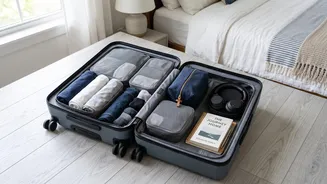
The bag you choose can be a strategic asset. A carry-on with multiple compartments is your best friend for organisation. It allows you to create a system: one pocket for documents, one for snacks, and a main section for clothes. Investing in packing cubes can take this a step further, letting you categorise items and compress clothing to save space. This not only helps at security but also makes finding anything you need during the flight much easier. A bag bursting at the seams is more likely to draw scrutiny and be difficult to repack.
Dress for Screening Success
Your attire can significantly impact your speed through security. Complicated, lace-up boots, belts with large metal buckles, and excessive heavy jewellery will all need to be removed. This adds extra steps and time to your screening process. Opt for simple, comfortable clothing and slip-on shoes. If you need to wear a jacket or belt, be prepared to remove it and place it in a tray. Keeping things simple means you spend less time undressing and redressing and more time heading towards your gate.
The Pre-Queue Pocket Dump
Don't wait until you're at the conveyor belt to start emptying your pockets. While you're in line, do a quick check and move all keys, coins, phones, and any other metal objects into a pocket of your jacket or into a specific compartment in your carry-on bag. This proactive step means that when it's your turn, your focus is only on placing your bags and electronics into the trays. Delhi Airport, for instance, specifically advises removing metal items in advance to speed up the process. It’s a small habit that eliminates a common, fumbling delay.
Start with an Empty Bag
It may sound counterintuitive, but a crucial tip from security experts is to always start packing with a completely empty bag. This prevents you from accidentally carrying prohibited items left over from a previous trip, like a full-sized water bottle or a small utility knife. Forgetting such items can lead to your bag being pulled for a manual search, causing significant delays and unnecessary stress. A quick check to ensure all compartments are clear before you begin packing provides peace of mind and a clean slate for an organised bag.