
An Unintentional Bullseye
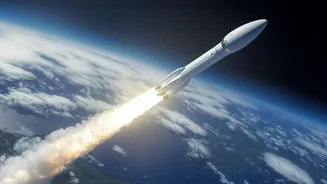
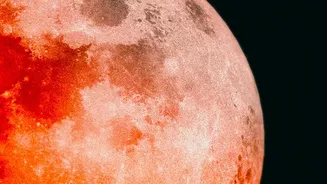
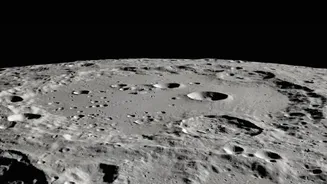
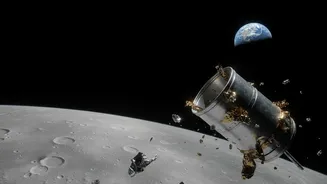
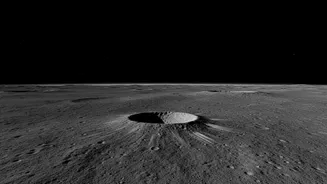
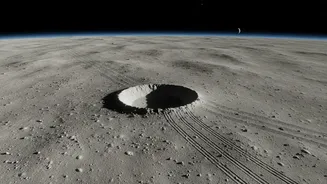
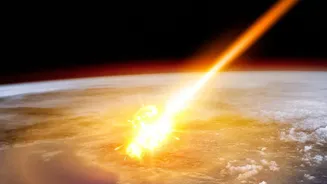
On August 5, 2026, the upper stage of a Falcon 9 rocket ended its journey not by burning up in Earth's atmosphere, but by crashing into the Moon. Launched in early 2025, the bus-sized component had successfully deployed its payload before being left in a chaotic,
drifting orbit. Over 18 months, the subtle gravitational pulls of the Earth, Moon, and Sun nudged it onto a collision course. Astronomers tracked the derelict stage, predicting the impact but unable to prevent it. The collision, confirmed by a plume of debris detected by telescopes, underscores a new reality: as space activity booms, our ability to track objects beyond Earth's immediate orbit is dangerously lagging. This wasn't the first such incident—a Chinese rocket stage hit the moon in 2022—but it serves as the latest, most visible warning shot.
Welcome to Cislunar Space
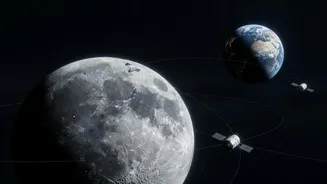
The region where this all played out is called cislunar space—the vast volume between the Earth and the Moon, including the area just beyond the Moon's orbit. It’s no longer the exclusive domain of national space agencies. A flood of commercial and government missions are targeting this area for science, resource extraction, and as a staging ground for deeper space exploration like the Artemis program. But unlike the well-monitored lanes of Low Earth Orbit (LEO), cislunar space is a frontier with no traffic control. The physics here are different; objects are governed by the competing gravity of both the Earth and Moon, resulting in complex, often unpredictable trajectories that defy simple tracking.
The Challenge of Watching the Void
Monitoring cislunar space is fundamentally harder than watching satellites near Earth. The sheer volume of space is enormous—about 10,000 times larger than the geosynchronous orbit we currently monitor. Objects are farther away, making them appear fainter and harder to detect with ground-based telescopes. The Moon itself creates a massive blind spot, its brightness obscuring anything nearby, a problem often compared to tracking a firefly next to a searchlight. Furthermore, the complex gravitational environment means objects don't follow neat, predictable paths, demanding more sophisticated tracking models and constant observation—something today's infrastructure isn't built for.
Building the 'Lunar Highway Patrol'
The recent impact has added urgency to the business of cislunar Space Situational Awareness (SSA). A new market is emerging to provide the necessary surveillance. The US Air Force Research Laboratory is working on projects like the Cislunar Highway Patrol System (CHPS) to test space-based surveillance technologies. Private industry is also stepping up. Companies like Lockheed Martin's subsidiary, Crescent Space Services, are planning to deploy communications and navigation networks like Parsec as early as 2025. Others, including Astrobotic, Momentus Space, and Northrop Grumman, are building the infrastructure—from landers to in-space transportation—that will both populate and rely on a safe cislunar environment. These efforts aim to create a catalog of objects and provide the data needed to prevent future collisions.
The Stakes for the New Space Economy
Without effective monitoring, the future of the burgeoning lunar economy is at risk. With dozens of missions planned over the next decade, the chances of collisions between active, multi-billion dollar spacecraft and derelict rocket bodies or other debris will only increase. An unmonitored environment threatens not just robotic missions but the safety of future astronauts who will inhabit lunar bases and the planned Lunar Gateway station. The accidental impact of a single rocket stage is a minor scientific curiosity today. But as the cislunar region becomes more crowded, the next uncontrolled impact could destroy a critical piece of infrastructure, contaminate a scientific site, or worse. The case for investing in monitoring is not just about preventing accidents; it's about underwriting the future of humanity's expansion into the solar system.