




An Arctic Giant on the Move
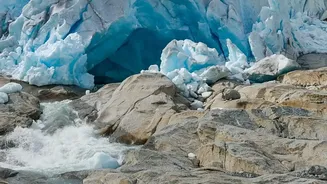
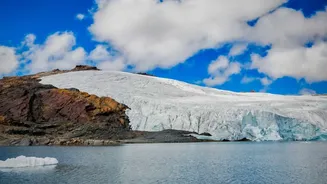
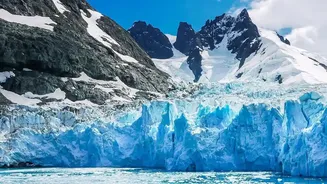
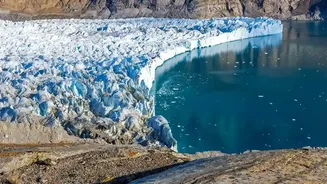
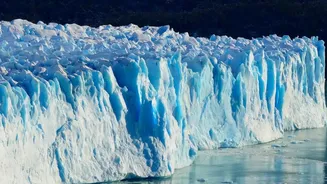
The Petermann Glacier is one of the largest and most significant glaciers in the Northern Hemisphere. It acts as a vast frozen river, channeling ice from the massive Greenland Ice Sheet out towards the Arctic Ocean. At its end, it forms a long, floating
platform of ice known as an ice tongue. These tongues act like a cork in a bottle, providing a natural buttress that slows the flow of ice from the land into the sea. Petermann's ice tongue has a history of dramatic break-ups, with major calving events recorded in 2008, 2010, and 2012. After that, the glacier entered a period of relative stability, but that calm has now been decisively broken.
The First Domino Falls
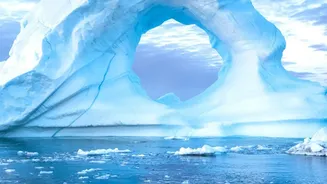
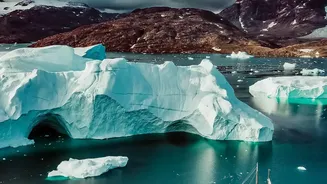
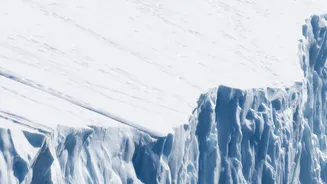
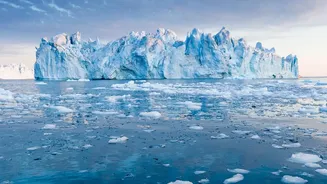
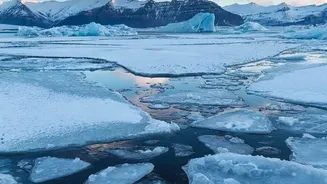
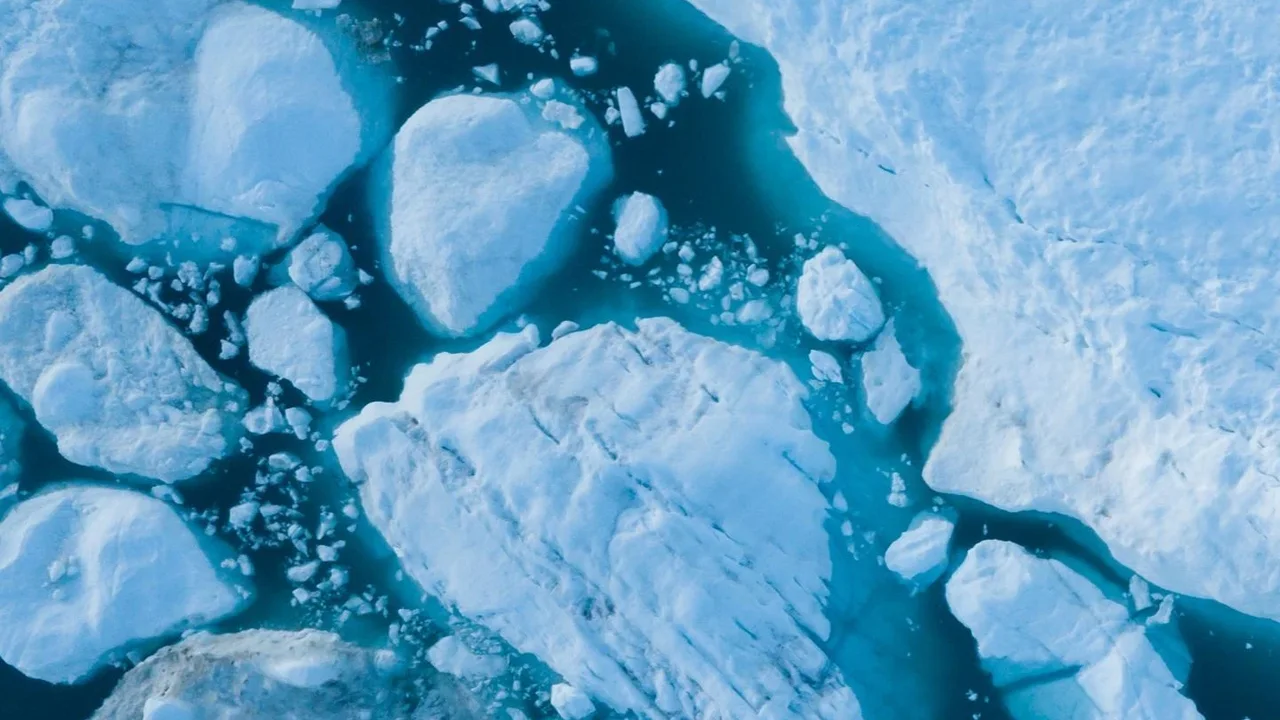
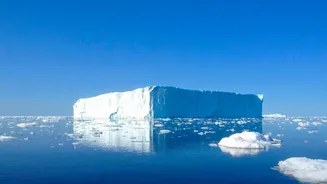
On August 4, 2026, satellite imagery from the European Space Agency confirmed what scientists had been anticipating for years. A colossal iceberg, covering an area of nearly 77 square kilometres, broke away from the main glacier. For perspective, this chunk of ice is roughly the size of Manhattan and may be up to 150 metres thick. The event marked Petermann’s largest single loss of ice in 14 years and was the most significant calving event in the entire Arctic since 2020. Scientists weren't caught by surprise; they had been monitoring growing cracks and fractures across the ice tongue for months, and even years, using radar and satellite data that showed the ice was becoming increasingly unstable.
What's Coming Next?
The concern now is that the August breakup is just the beginning. Researchers have identified two other large sections of the ice tongue that are riddled with rifts and appear highly vulnerable. According to scientific estimates, these two potential ice islands measure approximately 97 and 87 square kilometres respectively. If and when they detach, the glacier would lose a combined area far larger than the piece that just broke away. Such a loss would further destabilise the glacier by removing more of the floating tongue that holds back the land-based ice behind it, potentially accelerating its flow into the ocean.
Why This Distant Ice Matters
It can be difficult to grasp why a glacier breaking apart thousands of kilometres away in the Arctic should matter to people in India. The connection is direct: sea-level rise. The Greenland Ice Sheet is the single largest contributor to rising sea levels globally. While the melting of a floating iceberg doesn't raise sea levels on its own, the acceleration of glaciers like Petermann does, as it speeds up the transfer of ice from land to sea. This isn't a hypothetical future threat; it is an ongoing process that is already contributing to coastal erosion and increased flooding frequency around the world. For a country like India with over 7,500 kilometres of coastline and numerous low-lying cities, the stability of Greenland's ice is a matter of national importance.
A Symptom of a Warming World
The increasing instability of the Petermann Glacier is a clear symptom of a warming planet. The primary culprit is not just warmer air melting the ice from above, but warmer ocean water eating away at the glacier from below. This underwater melting undercuts the floating ice tongue, making it thinner, weaker, and more susceptible to fracturing. The events at Petermann are a physical manifestation of climate change in action, providing a stark and visible warning. The continued monitoring of Petermann and other major glaciers provides critical data that helps us understand the pace of change and the urgency of the climate crisis.