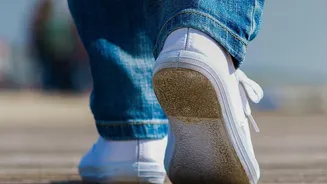








Walking is one of the most accessible forms of exercise, but we often overlook the most crucial piece of equipment: our shoes. The right footwear does more than just provide comfort; it is foundational to preventing injury and ensuring every step is a healthy
one.
More Than Just Cushioning
A good walking shoe is an impressive piece of engineering designed to support the unique biomechanics of a walking stride. Unlike running, where the impact is high and brief, walking involves a longer ground contact time with a distinct heel-to-toe rolling motion. Your shoes need to accommodate this. They should be stable from side to side, flexible at the ball of the foot, and provide adequate support for your arches. Poor footwear can throw this entire kinetic chain out of alignment, leading to pain not just in your feet, but potentially in your knees, hips, and lower back. Research shows that a significant percentage of people wear shoes that don't fit correctly, leading directly to foot pain and other issues. Investing in proper footwear means investing in a tool that helps your body move as it was intended, reducing strain and making your walks more enjoyable.
The Anatomy of a Great Walking Shoe
When shopping for walking shoes, several key features make a significant difference. First, look for proper arch support to help distribute pressure evenly and prevent conditions like plantar fasciitis. Next, check the heel counter—the part that wraps around your heel. It should be firm to provide stability and prevent your foot from sliding. Ample cushioning is also vital to absorb shock, but it should be balanced throughout the shoe, not just piled up in the heel. A common mistake is choosing a shoe that is too flexible; while it should bend at the ball of your foot, you shouldn't be able to twist it easily in your hands. Finally, a wide toe box allows your toes to spread out naturally, preventing issues like bunions and hammertoes.
Finding Your Perfect Match
Choosing the right shoe is a personal process that starts with understanding your own feet. Many people have a tendency to overpronate, where the foot rolls excessively inward. For them, a stability shoe can provide necessary correction. It's always best to get your feet measured, as sizes can change over time and vary between brands. When you try on shoes, do it in the late afternoon when your feet are at their largest, and wear the same type of socks you'd use for walking. There should be about a thumb's width of space between your longest toe and the end of the shoe. Walk around the store for a few minutes to ensure the heel doesn't slip and there are no uncomfortable rubbing spots. A good walking shoe should feel comfortable right out of the box, without a painful "break-in" period.
Common Injuries From Bad Shoes
Wearing improper footwear isn't just uncomfortable; it can lead to a host of painful injuries. Plantar fasciitis, a sharp pain in the heel, is one of the most common ailments and is often linked to a lack of arch support. Shin splints, which cause pain along the front of the lower leg, can result from poor shock absorption or inadequate support. Other frequent problems include Achilles tendinitis, stress fractures, blisters, and bunions—all of which can often be traced back to shoes that are too tight, too loose, or simply unsupportive. These issues not only sideline your walking routine but can also affect your daily mobility and overall quality of life.