








The Master of Two Tongues
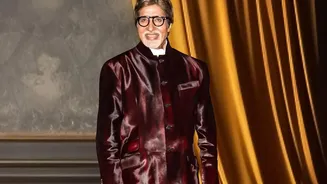
On the glowing set of Kaun Banega Crorepati, Amitabh Bachchan is more than just a host; he is a linguistic maestro. With unparalleled ease, he navigates between pristine, literary Hindi and articulate, sophisticated English, often within the same breath.
This seamless bilingualism is not merely a party trick but a foundational element of the show's massive success and Bachchan's cross-generational appeal. He can explain a complex historical query in chaste Hindi, then pivot to gently banter with a contestant in conversational English. This ability was a key reason he was chosen for the role, as producers recognized the need for a host who could connect with India's diverse, multi-lingual audience. His delivery is characterized by a calm, controlled pace and the strategic use of pauses, which commands attention and adds gravity to his words. This unique talent ensures that no viewer feels left out, whether they are from a metropolitan city or a small village.
The Power of 'Shuddh' Hindi
In an era dominated by Hinglish and urban slang, Bachchan’s use of 'shuddh' or pure Hindi on national television is a powerful statement. He often employs words that are rich, poetic, and sometimes complex, which has become a signature of the show. Phrases like 'Panchkoti Mahamoney' and endearing titles such as 'Computerji' have been penned by writers who know his capacity to elevate the script. His perfect diction and pronunciation bring a certain gravitas and respect back to the language. While he occasionally jokes about the difficulty of certain words, even fumbling once and remarking his jaw might break, his overall effect is one of reverence for the language. This isn't just about showing off a vast vocabulary; it's about re-introducing audiences to the beauty and depth of Hindi, taking the language back to its roots in a way that feels both educational and deeply respectful.
A Legacy Rooted in Literature
Bachchan's command over language is no accident; it is a legacy. He is the son of Dr. Harivansh Rai Bachchan, one of the most celebrated Hindi poets of the 20th century. Growing up in a household steeped in literature and poetry undoubtedly shaped his linguistic abilities and appreciation for the nuances of language. His father was not only a literary giant known for works like 'Madhushala' but was also involved in the evolution of Hindi as an official language while working in the External Affairs Ministry. This deep-seated influence is evident when Amitabh Bachchan recites his father's poetry, bringing the words to life with his iconic baritone voice. This background provides a rich context for his on-screen persona, grounding his fluency in a deep cultural and familial heritage dedicated to the power of words.
The Art of English Articulation
While his Hindi is celebrated for its purity, Bachchan’s English is admired for its clarity, eloquence, and accessibility. He speaks the language with a polished, almost theatrical flair, yet it never feels alienating. His communication style is often analyzed for its use of rhetorical devices, thoughtful word choices, and controlled delivery. He avoids the fast-paced, slang-filled English common in modern media, instead opting for a more formal, well-structured approach that is easy for a wide audience to comprehend. This mastery was honed over a long career in cinema, but it was on KBC that it found a new platform. By speaking English in a way that is both aspirational and understandable, he bridges a cultural gap, presenting a form of communication that feels both globally aware and distinctly Indian. His ability to maintain this balance is a testament to his skill as a communicator.
A Unifying Voice for a Diverse Nation
Ultimately, Amitabh Bachchan's bilingual fluency on KBC does more than just entertain; it unifies. In a country of countless languages and dialects, he stands as a figure who can speak to almost everyone. By giving equal respect to both Hindi and English, he validates the linguistic reality of modern India, where both languages coexist and hold cultural currency. His on-screen persona becomes a bridge, connecting contestants from varied backgrounds with a national audience. Whether he is humorously trying to understand Gen Z slang like 'killing it' or explaining the meaning of a profound Sanskrit-derived word, he does so with an inclusivity that makes everyone feel a part of the conversation. It is this unique ability to be at once a revered icon and a familiar, guiding voice that has cemented his and KBC's place in the heart of the nation.