






The Man Who Was the Company
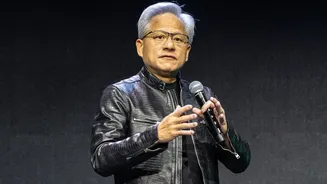
It is difficult to overstate Jensen Huang’s importance to Nvidia. He co-founded the company in 1993 and, for 33 years, was its only public face, chief strategist, and president. Analysts have long said, ‘Jensen is Nvidia. Nvidia is Jensen’. This isn't
just hyperbole; it reflects a deep-seated reality in the company's structure and culture. Huang cultivated an intentionally flat organization, with as many as 60 executives reporting directly to him. This structure was designed to ensure information flowed freely and to keep him at the center of every major decision. His departure leaves a power vacuum at the top of a $4.5 trillion technology giant, creating a textbook example of 'key person risk'—where a company is so reliant on one individual that their absence becomes a fundamental threat to the business.
An Unplanned Transition
The exit was abrupt. On November 12, 2026, Nvidia's board announced Huang had resigned, effective immediately. This followed intense media scrutiny over his personal conduct, including an affair with a woman suspected by U.S. intelligence of being a foreign agent. The company had no formal succession plan. One former Fortune 500 CEO called this lack of preparation 'preposterous'. In a crisis, the board appointed longtime Chief Financial Officer Colette Kress as interim CEO, while initiating a formal search for a permanent replacement. While Kress is a respected executive credited with overseeing immense financial growth since joining in 2013, her background is in finance, not the product-centric vision that Huang provided. This has left investors and the industry questioning who can truly fill Huang's leather jacket.
Is the AI Moat Defensible?
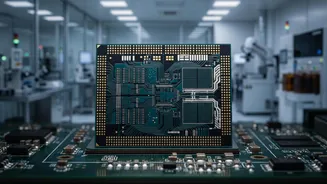
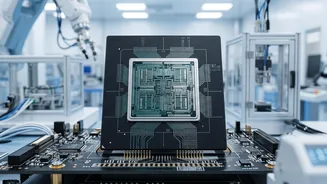
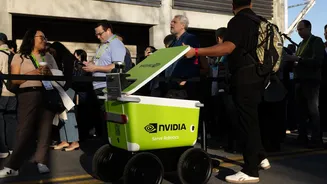
Nvidia’s dominance isn’t just about making the best chips. Its true strategic advantage, or 'moat', is its full-stack ecosystem. This includes the CUDA software platform, which over 6 million developers use, a vast network of libraries, and an end-to-end system design that creates 'AI factories'. The question now under scrutiny is whether this ecosystem is self-sustaining without its chief architect. Huang drove the relentless innovation cadence that kept competitors at bay. While a change in leadership won't immediately erase Nvidia's technological lead, a new CEO will face immense pressure to maintain that punishing pace. They must also navigate increasing competition from rivals like AMD and major customers like Google and Microsoft, who are developing their own custom AI chips to reduce their dependency on Nvidia.
The Search for a Successor
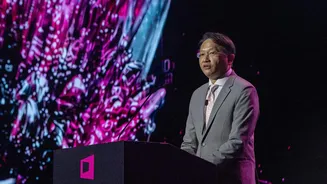
The board is considering both internal and external candidates, but there is no obvious heir apparent. Internally, names like Ian Buck, the creator of the crucial CUDA software, are mentioned for their deep technical expertise. However, Nvidia's flat structure means few executives have experience managing a business or owning a P&L. Externally, the field is wide open, with speculation running from rival CEO Lisa Su of AMD (who is also Huang's distant cousin) to former Salesforce co-CEO Bret Taylor or even seasoned leaders from cloud giants like Amazon and Microsoft. The challenge is finding a candidate who not only understands the highly complex semiconductor industry but can also embody the visionary, product-driven leadership that became Huang's trademark. The new leader won't be running a fiefdom, but a company under a microscope.