







A New Lens on the World
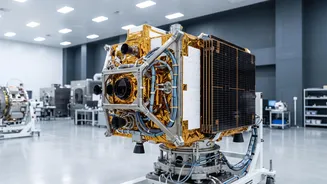
For decades, Earth Observation (EO) was the exclusive domain of national space agencies with large, expensive satellites. That era is over. A revolution is underway, driven by private companies launching constellations of smaller, cheaper satellites into
Low Earth Orbit (LEO). These constellations, operated by firms like Planet Labs, BlackSky, and others, provide a high-frequency stream of imagery, revisiting the same locations on Earth multiple times a day. But collecting torrents of data is only half the story. The real game-changer is the integration of Artificial Intelligence (AI). AI, specifically computer vision and machine learning, is essential to make sense of this data flood. Instead of rooms full of analysts manually scanning images, AI algorithms can automatically detect patterns, identify objects, and flag changes at a scale and speed impossible for humans.
The Unprecedented Opportunities
The combination of private satellites and AI is unlocking powerful applications across nearly every sector. Climate scientists can now monitor deforestation, track polar ice melt, and measure carbon emissions with greater accuracy. In agriculture, AI-analyzed satellite data enables precision farming—optimizing irrigation and fertilizer use to increase crop yields. Following natural disasters, rescue teams can get near-real-time maps of affected areas to coordinate emergency responses. The commercial applications are also exploding. Hedge funds use satellite data to predict commodity prices by monitoring mine activity, and retailers count cars in parking lots to estimate quarterly earnings. For a rapidly developing nation like India, this technology can be transformative for urban planning, infrastructure monitoring, and managing vital water resources.
The Watchers and the Watched
This powerful new capability is not without significant risks. The same technology that monitors crops can also monitor people, raising profound questions about privacy and surveillance. While current commercial satellite resolution is typically limited by regulation—enough to see a car, but not a person's face—the trend is towards ever-increasing detail. This creates a scenario where a private company could, in theory, track movements and activities without consent. Furthermore, the potential for misuse by corporations, authoritarian governments, or even non-state actors is a serious concern. The algorithms themselves can also be a problem. AI models trained on biased data can perpetuate and even amplify existing inequalities when applied to surveillance or resource allocation.
A Governance Vacuum in Orbit
Technology is moving much faster than law and policy. This rapid growth has created a governance vacuum. Key questions remain unanswered: Who owns the data captured from orbit? Who is liable if an AI misinterprets an image, leading to a flawed business or military decision? How can nations protect sensitive sites from being constantly monitored by commercial entities? The very nature of satellites, which cross international borders every few minutes, complicates jurisdiction. Establishing clear, international standards for data privacy, transparency, and accountability is a monumental challenge, but a necessary one to ensure this technology is used responsibly.
India’s Stake in the Stars
India is not just a passive observer in this new space race; it's an active participant. The Indian government has taken decisive steps to open its space sector to private enterprise, leading to a surge in startups. Companies like Dhruva Space and GalaxEye are developing everything from satellite components to entire mission platforms. The recent Bengaluru Space Expo (BSX) 2026 highlighted this shift, with local firms showcasing advanced Earth observation systems. Moreover, IN-SPACe, India's agency for promoting private space activity, has initiated a Public-Private Partnership to build the country's first indigenous commercial EO satellite constellation. With its space economy projected to grow significantly, India has a vested interest in shaping the global rules that will govern this powerful technology.