





A Vision for a Connected India
Indian Railways, often called the lifeline of the nation, is at the heart of a strategic mission to bolster India's infrastructure. Recent approvals for multi-tracking projects underscore a significant investment in the country's rail network. These projects are
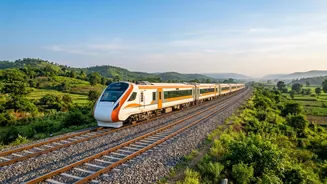
not just about adding more tracks; they represent a comprehensive plan to ease congestion on high-density routes, improve the reliability of train services, and connect previously underserved regions. The expansion is a core component of the PM Gati Shakti National Master Plan, which aims to create integrated and efficient logistics networks. By increasing the capacity of its busiest corridors, Indian Railways is paving the way for faster movement of both people and goods, which is critical for economic progress.
West Bengal, Jharkhand, and Odisha: Strengthening the Eastern Corridor
The eastern and central parts of India are set to receive a major boost with new multi-tracking projects. The Cabinet Committee on Economic Affairs recently approved several key projects, including the fourth line between Kharagpur and Jharsuguda. This expansion will pass through 14 districts in West Bengal, Jharkhand, and Odisha, enhancing connectivity for nearly 4,800 villages. These lines are crucial for transporting vital commodities like coal and iron ore from mineral-rich regions to industrial centers and ports. The addition of new tracks will significantly decongest this busy corridor, allowing for more efficient freight movement and creating capacity for additional passenger trains. This development is expected to spur economic activity and provide better access to markets, healthcare, and education for a population of around 56 lakh people in the region.
Madhya Pradesh and Chhattisgarh: Boosting Central India's Network
Central India is also a key focus of the ongoing expansion. Projects such as the fourth line for the Katni-Pendra Road section and the third line for the Bilaspur-Pendra Road section are set to transform rail travel in Madhya Pradesh and Chhattisgarh. With a combined investment of Rs 10,783 crore, these projects will add approximately 656 km of new railway lines. This expansion is designed to accommodate the increasing traffic on these routes, driven by the growth of industries and the need for faster transportation of goods. For passengers, it means improved punctuality and more reliable services. For the economy, it means a more robust supply chain, supporting industries like cement, steel, and foodgrains.
The Southern Push: Enhancing Mobility in the South
While the headline focuses on five states, the expansion is truly national. Recent announcements also highlight major upgrades across southern India, touching states like Tamil Nadu, Karnataka, and Andhra Pradesh. Projects include doubling the Hosur-Omalur line and adding third and fourth lines between Arakkonam and Renigunta. This will improve connectivity to key economic hubs, pilgrimage sites, and tourist destinations. The enhanced network is expected to support a significant increase in freight capacity, benefiting the region's diverse industries, from automobiles to textiles.
Beyond Tracks: Electrification and Economic Impact
This expansion is happening alongside another monumental effort: the near-complete electrification of the broad gauge network. As of mid-2026, Indian Railways has electrified over 99% of its network, a move that drastically cuts dependence on imported fossil fuels and reduces carbon emissions. The combination of new lines and electric traction means trains can run faster, carry more weight, and operate more efficiently. This modernization has a ripple effect on the economy. It lowers logistics costs for businesses, making Indian goods more competitive. It also connects agricultural centers to markets more effectively, reducing waste and boosting farmers' incomes. By linking remote areas to the national grid, the railway expansion fosters inclusive growth and creates new opportunities for millions.