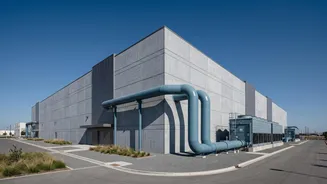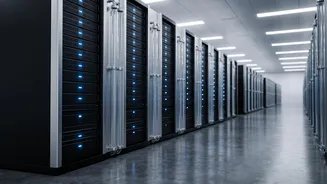






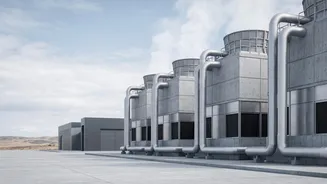


The Power-Hungry Nature of AI
At the core of the issue is that AI workloads are fundamentally different from traditional computing tasks. Training large AI models involves massively parallel computations running on thousands of specialised chips, or GPUs, which consume far more electricity
than standard CPUs. A single AI server rack can require 50 to 150 kilowatts of power, a stark contrast to the 10 to 15 kilowatts needed for a conventional rack. This isn't a minor increase; it's a step-change in energy consumption. A single ChatGPT query, for example, is estimated to use nearly ten times the energy of a regular Google search. This intense power draw from hardware running at maximum capacity generates an enormous amount of heat, creating a secondary efficiency challenge.
A Looming Energy and Water Crisis
The collective impact of this power surge is staggering. Data centres already account for about 1.5% of global electricity consumption, a figure expected to double by 2030, largely driven by AI. This rapid growth is putting immense strain on local and national power grids, many of which are already aging and have seen little demand growth for decades. Beyond electricity, these facilities are also incredibly thirsty. Many large data centres use evaporative cooling, which consumes millions of gallons of water daily—sometimes as much as a small city. As AI expands, its environmental footprint grows, raising serious questions about carbon emissions and the depletion of local water resources, especially in already water-stressed regions.
The Efficiency Paradox: AI as the Solution
Here's where the story takes a turn. The same AI that creates the problem also offers the most powerful solution. Data centre operators are increasingly deploying AI-driven software to manage their own facilities with unprecedented precision. One of the most successful applications is in cooling, which can account for up to 40% of a data centre's energy use. By analysing millions of data points from sensors that track server loads and temperatures, AI systems can predict heat fluctuations and adjust cooling systems in real-time. Famously, Google's DeepMind AI was able to cut the cooling energy bill at its data centres by 40%, showcasing the immense potential for AI-led optimisation. This allows for dynamic adjustments that human operators could never achieve, ensuring energy isn't wasted on over-cooling.
Beyond Smart Cooling
The efficiency gains don't stop at cooling. AI is also being used for predictive maintenance, where algorithms analyse equipment performance to forecast failures before they happen. This prevents the energy spikes and downtime associated with unexpected equipment breakdowns. Furthermore, AI excels at dynamic workload distribution. It can automatically shift computing tasks to the most energy-efficient servers or consolidate them to allow entire sections of a data centre to be powered down during periods of low demand. This intelligent resource allocation ensures that the expensive, power-hungry infrastructure is used as efficiently as possible, improving overall performance while cutting operational costs.
The Next Frontier: Liquid Cooling and New Designs
While software optimisation is powerful, the sheer heat generated by next-generation AI chips is pushing traditional air cooling to its absolute limits. This has accelerated the shift toward liquid cooling solutions, which are thousands of times more effective at transferring heat than air. Technologies like direct-to-chip cooling, where liquid is piped directly to the hottest components, can dramatically reduce the energy needed for thermal management and allow for even denser server racks. NVIDIA's latest AI infrastructure designs are now 100% liquid-cooled, a clear indicator of the industry's direction. This pivot in hardware design, combined with AI software, represents a systemic approach to tackling the efficiency challenge from all angles, making it a cornerstone of future data centre construction.