


Discovering the Soul of Portugal
Covering nearly a third of Portugal, the Alentejo is the country’s agricultural heartland, yet it remains wonderfully uncrowded. This is a region to be savoured slowly, best explored by car to navigate its quiet roads connecting whitewashed villages and historic
estates. The appeal lies in its authenticity; it’s a place where you are more likely to hear Portuguese than English at local attractions and where life moves at a more deliberate, thoughtful pace. The landscape itself is a character, with endless olive groves and cork trees stretching as far as the eye can see, punctuated by hilltop fortresses that have stood guard over the Spanish border for centuries. For those seeking a genuine connection to the country, away from the well-trodden tourist trails, the Alentejo offers a journey into the soul of Portugal.
The Majestic Lusitano Horse
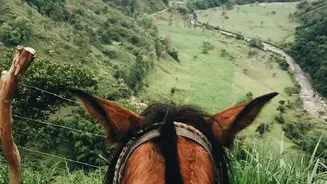
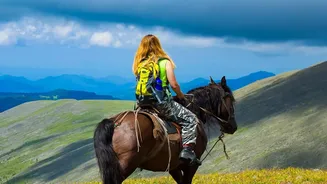
The Alentejo is the cradle of the magnificent Lusitano horse, a breed renowned for its agility, intelligence, and noble spirit. For any horse lover, an encounter with these animals is a must. The premier destination is the Alter Stud Farm (Coudelaria de Alter), founded in 1748 by King João V to breed horses for the royal riding school. It stands today as one of the oldest stud farms in the world still operating on its original site. Visitors can take guided tours of the historic stables, watch training sessions, and see the incredible sight of a herd of mares and their foals galloping across the fields. Beyond the stud farm, numerous local estates offer equestrian experiences for all levels, from gentle trail rides through the countryside to intensive dressage lessons on highly trained horses. Riding a Lusitano through the serene Alentejo landscape is an unforgettable way to connect with the region's deep equestrian heritage.
A Journey Through Hilltop Villages
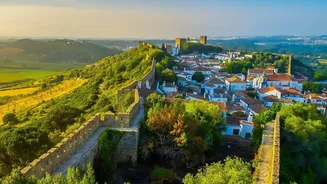
The Alentejo is dotted with some of Portugal’s most enchanting and well-preserved villages. Start with Évora, the region's capital and a UNESCO World Heritage site, where a Roman temple stands remarkably intact in the city centre. From there, venture east towards the Spanish border to find Monsaraz, a tiny, walled medieval village perched high on a hill. Its narrow, cobbled streets and whitewashed houses offer stunning views over the Alqueva reservoir, the largest artificial lake in Europe. Further north lies Marvão, another dramatic hilltop village enclosed within castle walls, offering breathtaking panoramas of the surrounding plains of the Serra de São Mamede Natural Park. Don’t miss Estremoz, known as the 'marble town' for its ubiquitous white stone, or Arraiolos, famous for its centuries-old tradition of hand-stitched carpets.
Echoes of an Ancient Past
The history of the Alentejo stretches back long before the Romans and medieval knights. The region is one of Europe's most significant sites for megalithic monuments. Just outside Évora, you can find the Almendres Cromlech, a mysterious stone circle older than Stonehenge. Driving through the countryside, you'll encounter numerous dolmens (ancient tombs) and menhirs (standing stones) that hint at the area's prehistoric significance. Exploring these ancient sites offers a profound sense of connection to the land and its earliest inhabitants. Many are located in serene, rural settings, allowing for a quiet moment of reflection far from the modern world. This deep layer of history adds another fascinating dimension to any journey through the Alentejo.
Planning Your Alentejo Escape
To make the most of this region, a rental car is essential. The best times to visit are during the spring (April-June) and autumn (September-October), when the weather is pleasantly warm, and the landscape is at its most beautiful. Spring brings a blanket of wildflowers, while autumn offers the golden light of the harvest season. Summers can be intensely hot, especially inland, while winters are mild but can be rainy. The local cuisine is a highlight in itself, focusing on hearty, rustic dishes and exceptional regional wines. Take your time, embrace the unhurried rhythm, and allow yourself to discover the quiet beauty and rich history that make the Alentejo so special.