







The Purity Problem: A System Under Scrutiny
The mandatory hallmarking system was designed to protect consumers, but recent reports have raised serious questions about its effectiveness. A draft report from the Comptroller and Auditor General (CAG) flagged significant gaps in the oversight process
managed by the Bureau of Indian Standards (BIS). The report revealed that in the 2024-25 financial year, a staggering 81% of licensed jewellers were not inspected as required. Over a five-year period, more than 83% of registered jewellers missed their mandatory annual inspections. This lack of consistent monitoring creates a significant risk, leaving consumers vulnerable to potential discrepancies in gold purity. The very system meant to provide a guarantee of quality is reportedly failing to keep up, undermining consumer confidence.
Understanding HUID: Your Gold's Digital Fingerprint
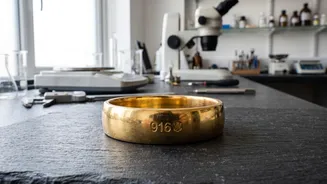
At the center of India's gold purity system is the Hallmark Unique Identification (HUID) number. Introduced in 2021, HUID is a six-character alphanumeric code that is laser-engraved onto each piece of hallmarked jewellery. Think of it as a unique digital passport for your ornament. This code links the item to a central database containing crucial information: the jeweller who sold it, the Assaying and Hallmarking Centre (AHC) that tested it, the date of hallmarking, and its declared purity. The system covers gold purities from 9K all the way to 24K. The goal of HUID is to make every piece of jewellery traceable and its quality verifiable, moving away from older, more generic marking systems that were easier to fake.
Your Ultimate Tool: The BIS CARE App
The single most powerful tool for a gold buyer today is the BIS CARE app, a free mobile application from the Bureau of Indian Standards. Available for both Android and iOS, the app allows you to instantly verify an HUID number. The process is simple: open the app, select the 'Verify HUID' feature, and enter the six-digit code from your jewellery. In seconds, the app should display the official record for that specific item. Since June 2026, the system has been enhanced, with AHCs required to upload photographs and the weight of each article, which can also be viewed in the app. This allows you to compare the jewellery in your hand with the official photo and weight in the BIS database, providing an extra layer of security.
How to Spot Red Flags During Verification
When you enter an HUID into the BIS CARE app, you are looking for a perfect match. A red flag should be raised if you encounter any of the following issues. If the app returns a 'record not found' error, the HUID may be fake. You should also be concerned if the details in the app—such as the purity level (e.g., 22K916), article type, or the jeweller's name—do not match what you have been told or what is on your invoice. Another warning sign is if the physical piece of jewellery does not match the photo or weight displayed in the app's record. Any mismatch is a valid reason to pause the purchase and demand clarification from the jeweller.
Lapses in Testing and Oversight
The concerns extend beyond jewellers to the Assaying and Hallmarking Centres (AHCs). The CAG's draft audit also found that BIS fell short of its monitoring targets for these centres by nearly 44% between 2020 and 2025. These are the very labs responsible for testing purity and assigning the HUID. When BIS was questioned about these shortfalls, it cited staff shortages and challenges in collecting samples from remote locations, justifications the CAG did not accept. For consumers, this raises a crucial question: if the watchdogs themselves are not being watched, how reliable is the certification? This makes personal verification by the buyer not just a good idea, but an essential final check.
Know Your Rights as a Consumer
If you suspect an issue with your hallmarked gold, you have clear rights and recourse. If a hallmarked item is found to be of lesser purity than marked, you are entitled to compensation. The compensation is set at two times the amount of the difference calculated based on the purity shortage for that article's weight, plus the testing charges. You can get your jewellery tested at any BIS-recognized AHC for a fee. If you find a discrepancy or suspect a jeweller is selling non-hallmarked items in a mandatory area, you can file a formal complaint through the 'Complaints' feature in the BIS CARE app. Selling gold that violates hallmarking rules can lead to severe penalties for the jeweller, including fines and even imprisonment.