






A New Landmark on the Moon
In a dramatic unveiling for the scientific community, researchers have announced the discovery of the McGetchin crater, named after pioneering lunar scientist Thomas McGetchin. This is no ancient pockmark; studies published in the journal Science Advances
confirm the impact occurred between April and May of 2024. The resulting crater is immense, measuring 222 meters (728 feet) across and about 43 meters (141 feet) deep. To put that into perspective, it’s larger than the Roman Colosseum and twice the length of a football field. This feature now stands as the largest newly formed impact crater ever identified anywhere in our solar system, making it what scientists are calling a 'once-in-a-century' discovery.
The Detective Work From Orbit
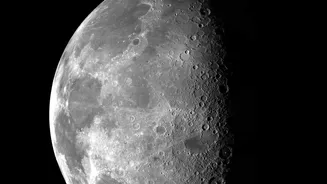
Finding this cosmic bullseye was a feat of persistence. The impact itself, caused by an asteroid or comet fragment, was not detected by telescopes in real-time when it happened in 2024. The credit for the discovery goes to NASA's Lunar Reconnaissance Orbiter (LRO), a spacecraft that has been tirelessly mapping the Moon for over 17 years. By comparing new images against older ones from its vast archive, researchers first flagged a change on the lunar surface in August 2025. Follow-up observations with the LRO’s powerful cameras confirmed their suspicions: a massive, fresh crater had appeared where none existed before. This before-and-after capability is what makes the LRO mission so valuable, allowing scientists to witness planetary evolution on a human timescale.
More Than Just a Hole
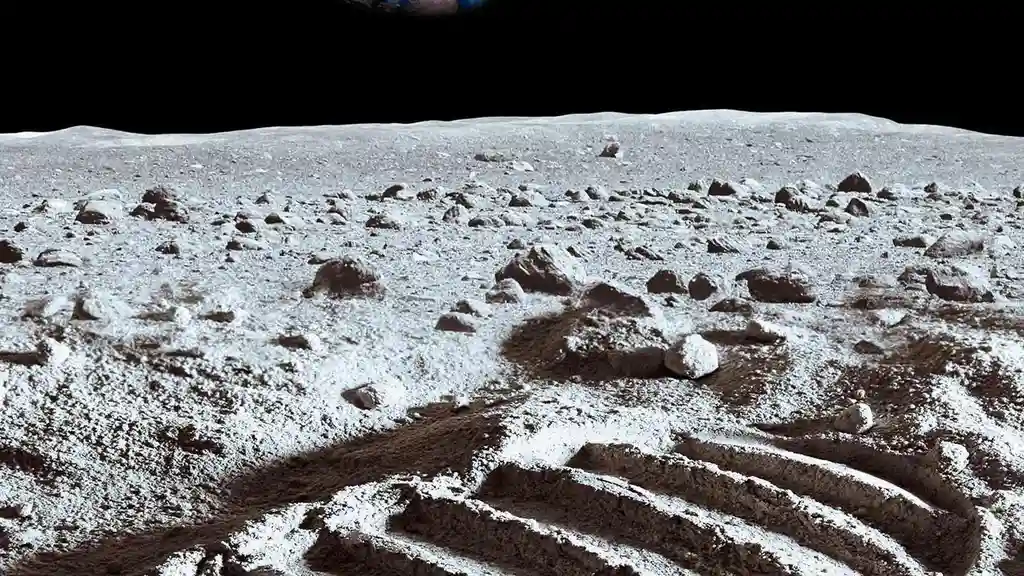
While the crater itself is impressive, the most groundbreaking findings lie in the surrounding area. The impact was so powerful it physically altered the lunar surface for kilometres in every direction. Scientists were astonished to find a seven-kilometre-wide “cold spot” surrounding the crater, an area that is significantly cooler than the nearby terrain during the lunar night. The reason, they believe, is that the shockwave from the collision effectively “fluffed up” the top layer of lunar soil, known as regolith. This de-compacted, fluffier ground is less dense and therefore less able to retain heat. One scientist likened the process to gardening on a cosmic scale, churning and loosening the soil. This discovery proves that the effects of a major impact extend far beyond the visible rim of the crater itself.
A Natural Space Laboratory
The Moon is a perfect laboratory for studying impacts because, unlike Earth, it has no significant atmosphere to slow down or burn up incoming space rocks. As a result, its surface is a preserved history of cosmic bombardment. The McGetchin crater is a particularly priceless specimen because it is so young. Scientists can study the immediate aftermath of a powerful impact before billions of years of solar radiation and micrometeorite strikes—a process known as space weathering—can erode the evidence. It offers an unprecedented glimpse into the raw physics of crater formation, including how material (ejecta) is thrown across the landscape. Researchers called it a 'statistically rare, effectively once-in-a-lifetime observation' that will inform impact models for decades to come.
Why It Matters for Future Explorers
This discovery is not just an academic curiosity; it has profound implications for the future of human space exploration. As NASA plans its Artemis missions to return astronauts to the Moon, understanding the lunar surface is a matter of safety and engineering. The revelation that an impact can significantly alter the soil's physical properties across a wide area is critical information for those designing rovers and planning construction for a future lunar base. Knowing how the regolith behaves—whether it's compact and firm or loose and fluffy—will be vital for landing spacecraft, building stable habitats, and ensuring rovers don't get stuck in unexpectedly soft ground. This new data helps paint a more accurate picture of the dynamic and challenging environment future explorers will face.