





The Power of a Pretty Plate
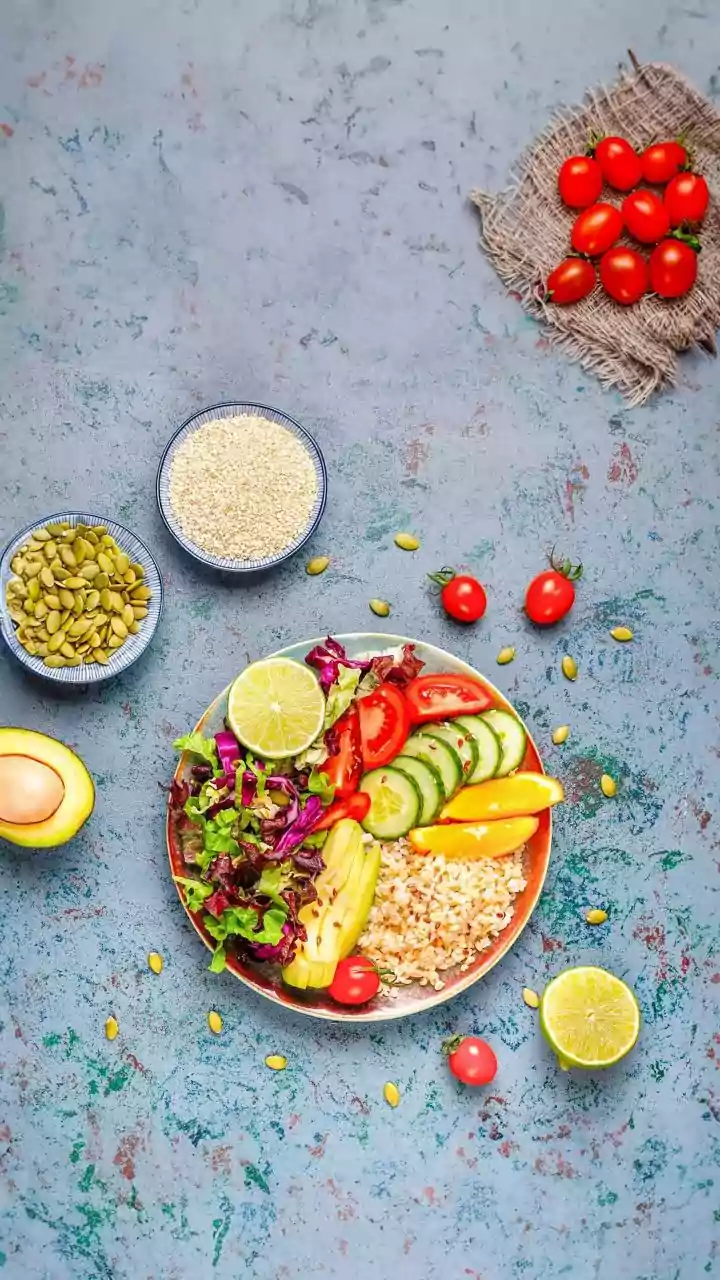
Our brains are wired to make snap judgments, and this extends to our food. Research shows that the way a meal is arranged can dramatically influence our perception of its healthiness and even its taste. A plate with neatly arranged, symmetrical components
is often perceived as healthier than the exact same ingredients served in a messy or haphazard way. This happens because classical aesthetics—things like order, balance, and systematic patterns—are often found in nature. Our minds create an unconscious link: if it looks orderly and natural, it must be better for us. This is sometimes called the 'health halo' effect, where one positive trait (a beautiful presentation) makes us view the entire meal more favourably, often leading us to underestimate its calorie count.
Order, Symmetry and Health
Studies have delved deep into this concept. One line of research found that when people are shown images of identical foods, like avocado toast, they rate the 'pretty' version—the one with neatly fanned avocado slices—as significantly healthier and more natural than an 'ugly' version with the avocado mashed messily. This perception holds true even when participants are given the exact same ingredient list for both versions. The bias is so strong that people are often willing to pay more for the aesthetically pleasing option, believing it offers superior health benefits. This suggests that our brains use visual orderliness as a mental shortcut to gauge how 'pure' or 'unprocessed' a food is, which then translates into a perception of healthiness.
Colour and Composition Cues
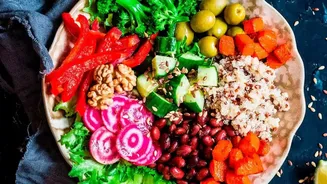
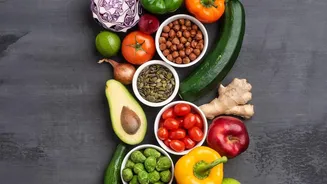
Beyond just neatness, other visual elements play a crucial role. A colourful plate, rich with a variety of brightly hued fruits and vegetables, is almost universally seen as fresh and nutritious. This encourages us to eat a more balanced diet, as assembling a 'rainbow' on our plate ensures we consume a wider range of nutrients. Even the placement of sauce can make a difference. A recent study found that a dish was perceived as healthier when the sauce was served separately on the side, rather than drizzled all over the main component. This minimal presentation gives the diner a sense of control and makes the dish appear lighter and less calorie-dense, even before the first bite.
The Social and Environmental Context
Our perception of food isn't just formed in a vacuum; it's also influenced by our environment and the people around us. Studies on social eating habits show that we tend to model the behaviour of our dining companions. If friends choose healthy options, we are more likely to do the same. Similarly, the overall food environment matters immensely. Research has shown that individuals in an environment with an abundance of healthy food options and visual cues that reinforce healthy eating are over four times more likely to consume fruits and vegetables. This highlights that our choices are a complex interplay of personal perception, social influence, and the availability of good options. Being mindful of how our food is presented is one powerful tool we can use to guide ourselves toward better habits.