








Understanding NavIC: India’s Own GPS
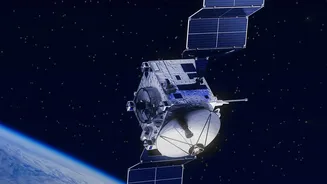
Navigation with Indian Constellation, or NavIC, is the operational name for the Indian Regional Navigation Satellite System (IRNSS). It is India’s autonomous satellite navigation system, a homegrown alternative to foreign-owned systems like the American
GPS, Russia’s GLONASS, or Europe’s Galileo. Developed by the Indian Space Research Organisation (ISRO), NavIC is designed to provide accurate real-time positioning and timing services. Its primary service area covers the entire Indian landmass and extends approximately 1,500 kilometres beyond its borders. This capability is vital not just for civilian applications like mapping and transportation, but more critically for the nation's security and armed forces, ensuring that India has sovereign control over its navigation intelligence, especially during times of conflict.
The Need for a New Generation
The original constellation of IRNSS satellites, launched between 2013 and 2018, faced a significant challenge: the failure of their imported rubidium atomic clocks. These clocks are the heart of any navigation satellite, providing the ultra-precise timekeeping necessary to calculate a user's position. Multiple clock failures across the first-generation fleet degraded the system's overall health and reliability, leaving fewer than the minimum number of satellites required for independent positioning. This created an urgent need for a replenishment and upgrade program, leading to the development of the second-generation NVS series of satellites. This new series is designed not just to replace the ageing satellites but to significantly enhance the entire system.
Meet the NVS Series
The NVS satellites represent a major leap forward for the NavIC program. The series, which includes NVS-01, NVS-02, and NVS-03, is planned as a five-spacecraft augmentation to bolster the constellation. One of the most significant upgrades is the inclusion of an indigenously developed Rubidium Atomic Clock, a direct response to the issues with the imported clocks on earlier satellites. These new satellites also transmit on the L1 frequency band, which is widely used by civilian devices like smartphones and wearables, a move expected to dramatically increase NavIC's adoption among the general public. Furthermore, the NVS satellites are designed for a longer mission life of 12 years, ensuring the system's longevity and stability. While NVS-01 was successfully launched in May 2023, the subsequent launch of NVS-02 in January 2025 failed to reach its intended orbit, making the success of NVS-03 even more critical.
The Critical Launch of NVS-03
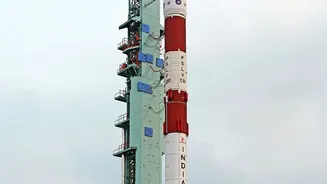
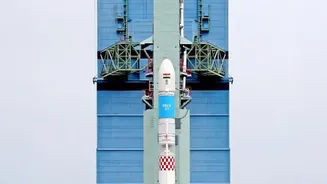
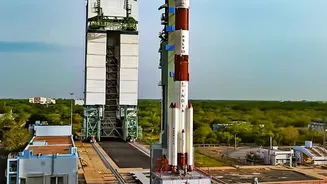
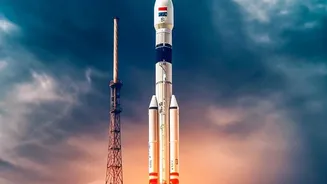
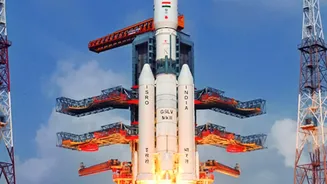
As of late September 2026, the launch of NVS-03 is a top priority for ISRO, with a launch window targeted for mid-October 2026. With the NavIC constellation operating below the minimum threshold of four satellites needed for standalone positioning services, the successful deployment of NVS-03 is crucial to restore full functionality. Its launch is seen as a vital step to reactivate NavIC’s independent services, which are essential for military applications such as guiding missiles and coordinating troop movements. The satellite is reportedly ready at the Sriharikota spaceport, and the launch campaign is underway. A successful mission will bring the constellation back to the required strength, ensuring that India’s armed forces and strategic assets have access to a secure, uncompromised, and sovereign navigation network.