





An Astronomical Valuation
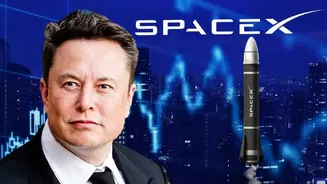
In a series of statements in late 2026, Elon Musk suggested a potential valuation for SpaceX that could be 'orders of magnitude more than the current Earth economy'. With the global economy estimated at over $120 trillion, this claim moves beyond typical
corporate forecasting into a different realm of thinking. Musk later clarified this wasn't a guarantee but a 'possible outcome' he sees a path toward. This thinking forces a fundamental question: how can one company be worth more than all the goods and services produced on the planet? For Musk, the answer does not lie on Earth at all. The valuation is not for the company as it exists today—a dominant satellite launcher and internet provider—but for its role as the primary architect of a future multi-planetary economy.
The Infrastructure of a New World
The core of Musk's argument is that the real value of SpaceX is in building the essential infrastructure for human civilization to expand beyond Earth. Well-designed infrastructure is a proven catalyst for economic growth, reducing costs and enabling new industries to form. On Earth, investments in energy, transport, and digital networks have consistently generated massive economic returns. Musk is applying this logic on an interplanetary scale. He has stated that establishing a self-sustaining city on Mars is the ultimate goal. Such a city would require a population of around one million people and vast amounts of cargo to become truly independent of Earth. This isn't just about sending a few astronauts; it's about building the Martian equivalent of roads, power grids, and factories. The entity that builds that transport system—the 'railroad' to Mars—captures a foundational piece of an entirely new economy.
Starship: The Economic Engine
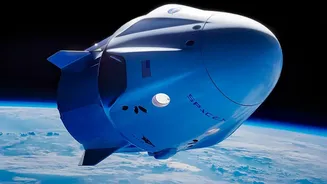
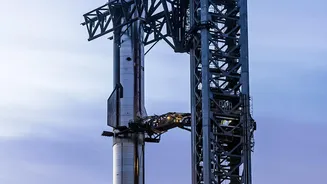
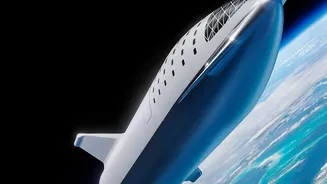
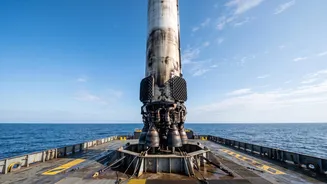
This grand vision hinges on a single piece of technology: Starship. This fully reusable transportation system is designed to drastically reduce the cost of lifting mass into orbit and, eventually, to Mars. Musk's long-held goal has been to lower the cost of a trip to Mars from a theoretical $10 billion per person to something comparable to a median house price in the US. Achieving this requires not just reusability but also the ability to refuel in orbit and produce propellant on Mars itself. In this model, Starship is not just a rocket; it's the economic engine that makes the off-world infrastructure project feasible. It’s the tool intended to move the million people and millions of tons of cargo needed to establish a self-sufficient Martian colony within a projected 20 to 40-year timeframe.
Investing in a Science-Fiction Future
This valuation thesis is, by any measure, a high-stakes wager on a future that is far from guaranteed. Analysts note the immense risks and costs of operating in space, suggesting that any potential future cash flows from off-planet ventures should be heavily discounted. However, this philosophy is already being baked into the company's structure. Recent filings related to SpaceX's IPO and Musk's compensation plan reportedly tie his rewards directly to achieving massive valuation milestones and, crucially, establishing a permanent, self-sustaining human settlement on Mars. Investors are not just buying shares in a rocket company; they are funding a multi-decade project to make humanity a multi-planetary species. The bet is that the economic returns from creating a new branch of civilization will eventually dwarf any industry confined to Earth.