





What Was EOS-05?
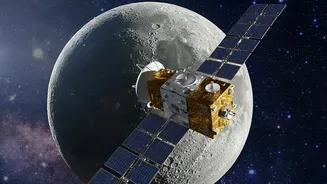
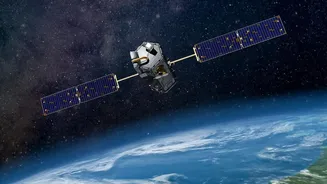
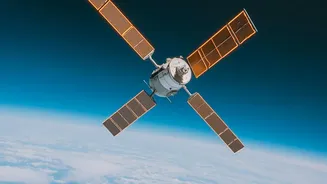
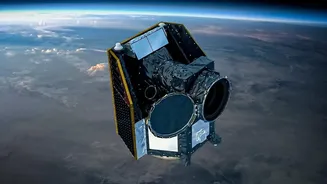
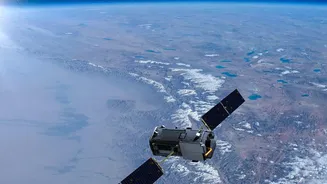
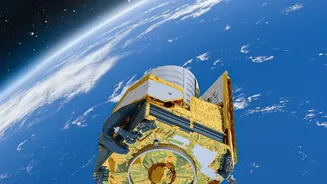
EOS-05, also known as GISAT-1, was a state-of-the-art Earth observation satellite designed by the Indian Space Research Organisation (ISRO). Unlike most observation satellites that orbit the Earth in a lower path and revisit a location only periodically,
EOS-05 was destined for a geostationary orbit, approximately 36,000 kilometres above the surface. From this fixed position, it would have been able to continuously monitor the entire Indian subcontinent. Its primary goal was to provide near real-time, high-resolution imagery, which would have been a game-changer for many sectors. Think of it as a dedicated, high-powered CCTV camera for the nation, capable of capturing images of a specific area every five minutes and the whole country every half hour.
A Mission Cut Short
The anticipation for EOS-05 was immense, but the mission ended in disappointment. On August 12, 2021, the GSLV-F10 rocket carrying the precious satellite lifted off from Sriharikota. While the initial stages of the launch were flawless, a critical failure occurred in the final, cryogenic upper stage. ISRO’s subsequent investigation revealed that a technical anomaly prevented this stage from igniting. This meant the rocket could not generate the final thrust needed to place the satellite into its intended orbit. Instead of reaching its home in the sky, the rocket and its valuable payload were lost. It was a significant setback for a mission that had been in development for years and carried immense strategic importance.
The Impact of a Lost 'Eye'
So, what did India lose when EOS-05 was lost? The impact was not just about a failed rocket launch; it was about the delay of critical capabilities. The primary loss was the ability to monitor natural disasters in near real-time. With its constant gaze, EOS-05 could have provided invaluable, up-to-the-minute data on the formation and movement of cyclones, the spread of forest fires, and the development of flood situations. This information is vital for issuing timely warnings, evacuating people, and deploying rescue teams effectively. For a country that frequently faces extreme weather events, this capability is not a luxury but a necessity for saving lives and property.
Consequences for Security and Agriculture
The impact extended beyond disaster management. The satellite was also intended to be a crucial asset for national security, offering continuous surveillance over India’s vast land and sea borders. This persistent monitoring would have enhanced the ability of security forces to track movements and changes in sensitive areas. Furthermore, the agricultural sector stood to lose significantly. EOS-05’s advanced sensors were designed to monitor crop health, assess vegetation, and track soil conditions over large areas. This data helps in forecasting yields, managing water resources efficiently, and providing farmers with crucial advice. The failure delayed access to this next-generation monitoring that could boost agricultural productivity and resilience.
ISRO's Path Forward
While the loss of EOS-03 (the satellite's other designation) was a blow, ISRO is known for its resilience. The space agency thoroughly analysed the failure to ensure the issue with the cryogenic stage was resolved for future missions. In the years since, ISRO has conducted numerous successful launches, demonstrating the strength of its other launch vehicles like the PSLV and the LVM3. The organisation has continued to launch other Earth observation and navigation satellites, ensuring that its broader space programme remains on track. Work on a replacement satellite with similar, if not enhanced, capabilities began to fill the gap left by the 2021 failure. In fact, a replacement satellite, also named EOS-05, was successfully launched in September 2026, finally delivering the capabilities that were lost five years prior and marking a crucial comeback for the agency.