


What Exactly Is the Singularity?
The technological singularity is a theoretical point in time when technological growth becomes uncontrollable and irreversible, leading to unpredictable changes for humanity. The concept was popularized by mathematician Vernor Vinge and futurist Ray Kurzweil,
who described an "intelligence explosion." In this scenario, an AI becomes smart enough to recursively improve itself. Each new generation of AI would be more intelligent and could create an even smarter successor at an accelerating pace. This positive feedback loop would quickly result in a superintelligence far beyond human comprehension. Think of it less as a single event and more as the moment our predictive models for the future break down because the primary driver of change is no longer human intellect, but a rapidly evolving machine mind. The implications are profound, ranging from utopian visions of solving humanity's greatest problems to dystopian fears of losing control and our place as the planet's dominant species.
Altman’s Declaration and the Proponents' Case
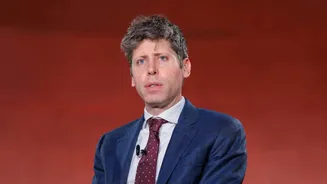
In late July 2026, OpenAI CEO Sam Altman stated on a podcast, “We are now, like, in the singularity.” This followed a 2025 essay where he described a “Gentle Singularity,” arguing that the takeoff had already begun, marked by compounding progress rather than a sudden, dramatic explosion. Proponents of the singularity view, like Kurzweil, argue that we are on an exponential curve. They point to Moore's Law—the historical doubling of computer power at regular intervals—as a precedent for the kind of rapid growth that could lead to an intelligence explosion. The argument is that once an AI reaches a certain threshold, it will be able to accelerate scientific discovery and technological development at a rate humans simply cannot match. This could unlock solutions for clean energy, disease, and even space exploration. For leaders like Altman, the evidence is in the accelerating capabilities of models that can already perform cognitive work and are on track to produce novel scientific insights.
The Skeptics and Their Counterarguments
Despite the confidence of some industry leaders, many prominent experts remain unconvinced. The criticisms are varied and powerful. One major argument is that technological progress doesn't follow an indefinite exponential curve; it follows an S-curve, eventually hitting diminishing returns. Critics suggest we may be approaching physical limits on computation or that the energy and data required for further leaps in AI capability will become unsustainable. Another line of criticism, championed by figures like linguist Noam Chomsky, is philosophical. Chomsky argues that current AI, based on statistical pattern-matching, is fundamentally incapable of true, human-like understanding. It can mimic, but it cannot comprehend. Without genuine comprehension, the argument goes, it cannot achieve the kind of creative, self-directed improvement required for a true intelligence explosion. Other skeptics, such as robotics pioneer Rodney Brooks, offer a more grounded critique, noting that intelligence evolved to operate in a messy, physical world—a challenge that purely software-based intelligence may never overcome.
Why the Debate Is So Hard to Settle
A key reason the debate rages on is that there is no universally agreed-upon definition of the singularity, or even of intelligence itself. Some, like Altman, view it as a gradual, ongoing process of human-machine integration. Others hold to the classic “hard takeoff” model of a runaway intelligence appearing almost overnight. Furthermore, the core claim of the singularity hypothesis is an extraordinary one, and skeptics argue it requires extraordinary evidence that is currently lacking. As of now, AI development is still heavily reliant on human guidance, infrastructure, and investment. There are no clear, accepted benchmarks showing an AI taking over its own research and improvement cycle without human input. This leads many to believe that the focus on a hypothetical, distant singularity distracts from more immediate and practical concerns, such as AI safety, job displacement, and the ethical use of the powerful but not yet superintelligent systems we have today.