






From Suborbital Hops to Orbit
Until now, Starship's test flights have been impressive but limited. Previous integrated tests of the full rocket system followed suborbital paths—essentially, massive hops into space that were designed to fall back to Earth in a predictable manner, maximising
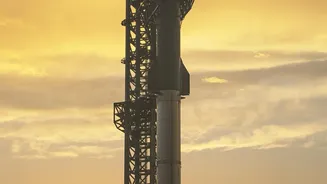
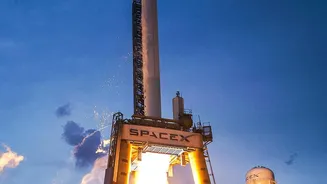
safety while gathering data. The 14th flight on September 28, 2026, was fundamentally different. For the first time, the objective was to achieve a sustained orbit around our planet, transitioning Starship from a test vehicle into an operational spacecraft. This flight saw the Super Heavy booster lift the Starship upper stage, separate successfully, and perform a controlled splashdown in the Gulf of Mexico. The Starship itself then fired its own engines to push into orbit, a critical milestone that moves the program into a new phase of development focused on reuse and long-duration missions.
Success, with an Asterisk
The mission was not without its share of drama. During the ascent, one of the Raptor engines on the Starship upper stage shut down prematurely. For several tense minutes, mission controllers at Starbase in Texas deliberated on whether to abort the orbital insertion burn. Ultimately, they gave the 'go' call, determining the remaining engines were healthy enough to compensate and complete the manoeuvre. Starship successfully reached its target orbit, an altitude of about 275 kilometers. However, the planned 10-hour, six-orbit mission was cut short. Citing an abundance of caution due to the engine issue, SpaceX opted to bring the vehicle home early. The spacecraft completed its deorbit burn and splashed down in the Pacific Ocean after about three hours. While the splashdown itself reportedly ended in a fiery explosion, the key objectives were met.
A Payload and a Purpose
This flight was more than just a joyride; it was the first to carry an operational payload. Tucked inside its bay were 26 of SpaceX's next-generation Starlink V3 satellites, which were successfully deployed into orbit. This achievement is a crucial proof of concept for the rocket's primary business case: launching larger and more capable satellites that cannot fit inside the company's workhorse Falcon 9 rockets. The success of this deployment is vital for the financial viability of the Starlink constellation, which is currently SpaceX's only profitable division. The mission also demonstrated key capabilities needed for future crewed missions, including engine relight in space and a controlled atmospheric reentry, even if the final landing was destructive.
What the 'Failure' Really Means
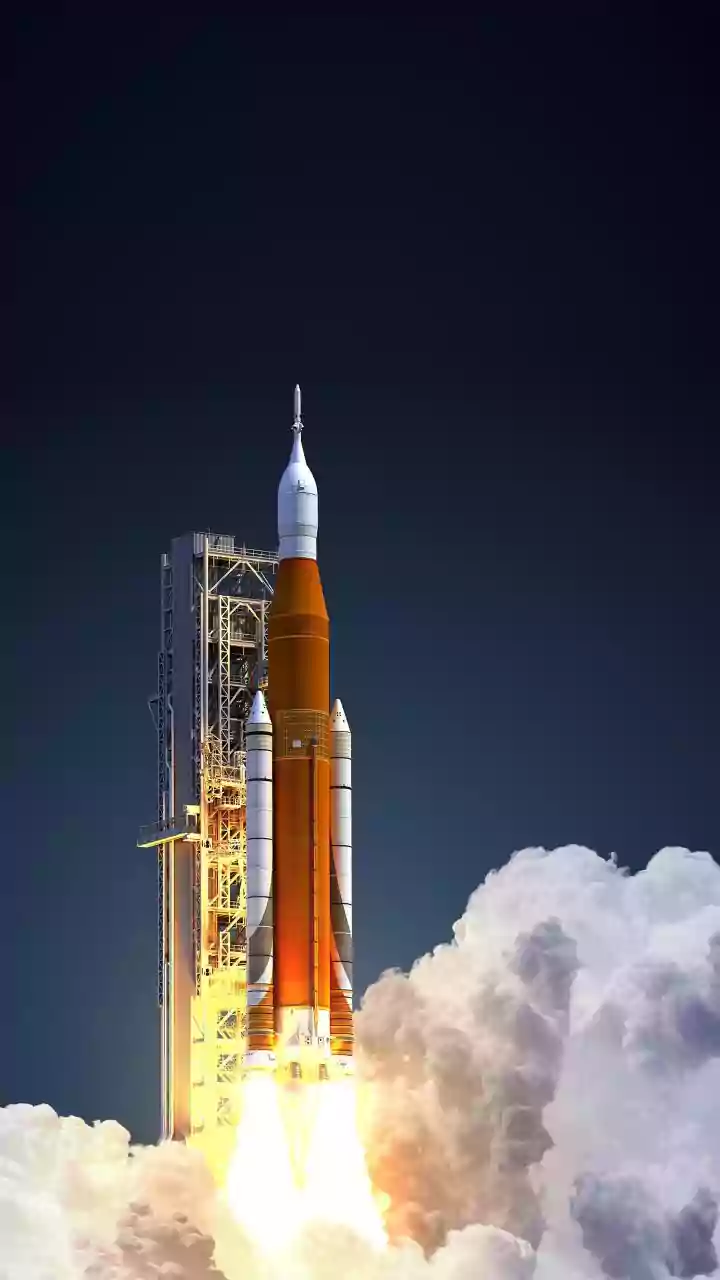
An engine shutting down mid-flight sounds like a major failure, but within SpaceX's rapid iterative development philosophy, it's considered a valuable data-gathering opportunity. The company builds, flies, and sometimes breaks its rockets to learn how to make them more robust. The fact that Starship could lose an engine and still achieve its primary mission of reaching orbit is a testament to the vehicle's built-in redundancy. However, the engine anomaly does raise questions. Experts will be watching to see if the issue was a one-off component failure or indicative of a more fundamental design problem that could require fleet-wide modifications. The answer will have significant implications for the program's schedule, especially with NASA counting on a version of Starship to land astronauts on the Moon for the Artemis IV mission, planned for 2028.