








A Spontaneous Act of Care
One of the most powerful narratives associated with Raksha Bandhan comes from the epic Mahabharata, involving Lord Krishna and Draupadi, the wife of the Pandavas. Though not related by blood, they shared a deep bond of friendship and respect, with Krishna often
addressing her as 'sakhi' (friend). According to popular retellings, Krishna cut his finger—some versions say while handling sugarcane, others say on his Sudarshana Chakra after slaying the king Shishupala. While others present, including his queens, hesitated or sent for aid, Draupadi acted instantly. Without a moment's thought, she tore a strip of cloth from her expensive sari and tied it around his bleeding finger.
The Divine Promise of Protection
Krishna was deeply moved by this selfless and spontaneous act of care. He saw not just a bandage, but a symbol of pure, unconditional affection. In that moment, he made a solemn vow to Draupadi. He declared that he was now indebted to her and that with this simple piece of cloth, she had bound him to her protection. He promised to repay her kindness whenever she found herself in distress. This promise was not a casual assurance. It became a divine contract, where the strip of her sari transformed into a 'Raksha Sutra'—a bond of protection—that he would honor no matter the cost.
A Debt Repaid in Full
The true weight of Krishna's promise was revealed during one of the most harrowing episodes in the Mahabharata: the 'vastraharan' or 'cheer haran'. After the Pandavas lost Draupadi in a game of dice, the victorious Kauravas attempted to publicly dishonor her by disrobing her in open court. As she was about to be humiliated, Draupadi, in her moment of absolute crisis, called out to Krishna for help. Fulfilling his vow, Krishna miraculously intervened. The sari she had once torn a piece from to help him now became endless. No matter how much the Kaurava prince Dushasana pulled at her garment, it continued to unspool, protecting her dignity until he collapsed from exhaustion. Krishna repaid the debt of a small strip of cloth with an ocean of divine grace, cementing the story as a powerful allegory for Raksha Bandhan.
Symbolism Beyond Siblinghood
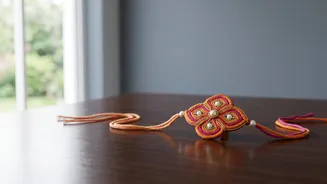
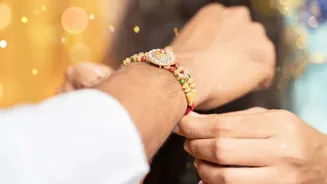
This story offers a different, arguably deeper, perspective on Raksha Bandhan. While the festival is most widely celebrated as a bond between brothers and sisters, the Krishna-Draupadi narrative highlights that the true essence is a bond of 'dharma' and selfless love, not necessarily blood relation. It demonstrates that protection is a reciprocal act, initiated in this case by a woman's act of care. Draupadi is the initial protector, tending to a wound. The 'rakhi' she ties is not part of a formal ritual but an impulsive gesture of compassion. This reframes the festival, suggesting that anyone can tie this sacred thread to another person for whom they feel affection and a sense of responsibility.
Modern Relevance and Interpretation
Today, this legend resonates strongly because it presents a more egalitarian vision of the 'bond of protection'. It shifts the focus from a transactional model—where a sister prays for a brother in exchange for his protection—to one based on mutual regard and spiritual kinship. The story of Draupadi and Krishna teaches that Raksha Bandhan is a celebration of any bond where one person pledges to safeguard another, be it between friends, gurus and disciples, or even with the divine. It reminds us that the promise of protection is not just a brother's duty, but a universal human commitment born from genuine love and care.