


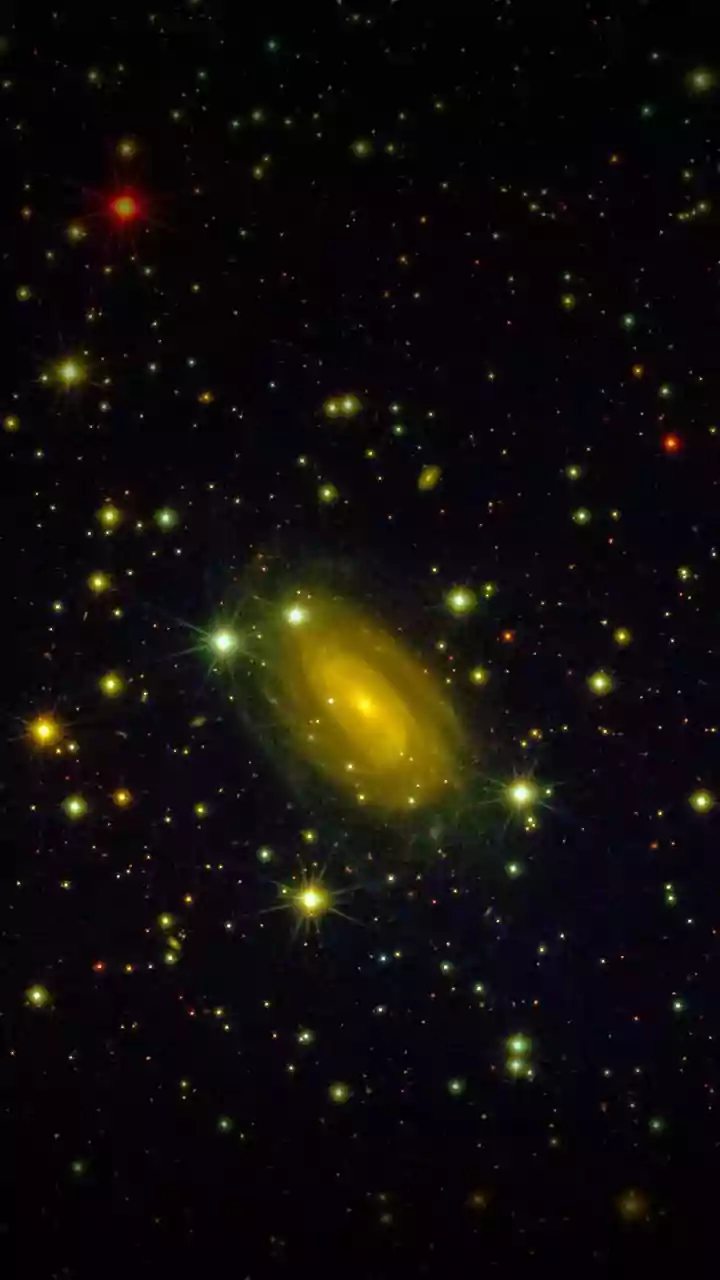




Meet the Super-Earth
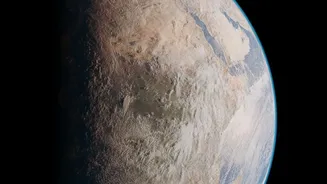
Located approximately 49 light-years away, LHS 1140 b is what astronomers call 'super-Earth'. Discovered in 2017, it's about 1.7 times the size of our planet and has a mass around 5.6 times greater. It orbits a red dwarf star, which is smaller, cooler,
and dimmer than our Sun. Because its star is less powerful, the planet circles it at a much closer distance than Earth orbits the Sun, completing a full 'year' in just under 25 days. Initially, its high density suggested it was a dense, rocky world. However, more recent studies have updated these figures, indicating a lower density. This suggests that a significant portion of the planet's mass, perhaps 10-20%, is water, leading to theories that it could be a water world or an ice planet.
A Prime Candidate for Life?
What made LHS 1140 b so exciting was its location within its star’s 'habitable zone'. This is the so-called 'Goldilocks' region where conditions are just right—not too hot and not too cold—for liquid water to potentially exist on a planet’s surface. Given that liquid water is a key ingredient for life as we know it, planets in this zone are prime targets for astronomers. LHS 1140 b receives about 43% of the solar energy that Earth does. While its baseline temperature is very cold, a sufficiently thick atmosphere could create a greenhouse effect, warming the surface enough to support liquid oceans. The relative quietness of its host star, which doesn't seem to produce as many violent flares as other red dwarfs, added to the hope that any atmosphere could have survived for billions of years.
A Landmark Discovery
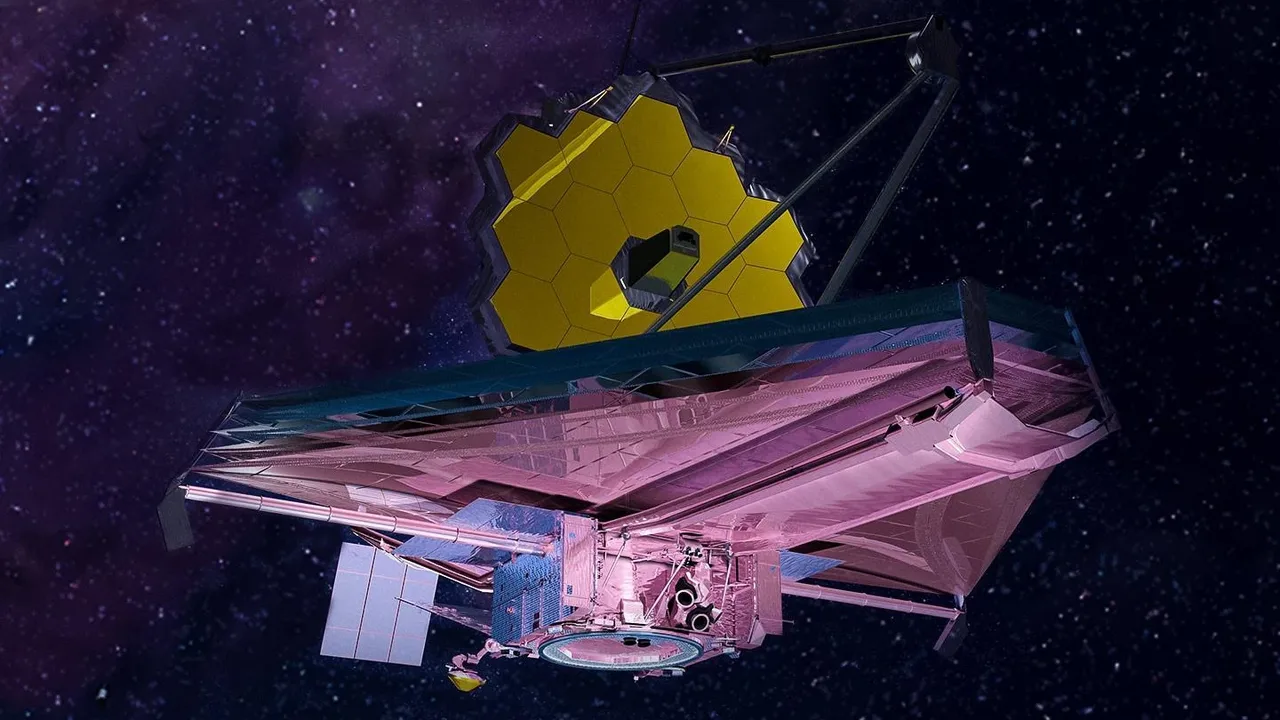
The game changed with recent studies, including observations from the James Webb Space Telescope (JWST) and ground-based observatories. A pivotal study published in July 2026 provided the first confirmed detection of an atmosphere around a rocky planet in the habitable zone. Using the Magellan Clay telescope in Chile, astronomers detected helium escaping from the planet's upper atmosphere. This was a breakthrough because finding atmospheres on smaller, rocky worlds has been incredibly difficult. While previous JWST observations had ruled out a thick, hydrogen-rich atmosphere like Neptune's, this new evidence confirmed that LHS 1140 b had managed to hold onto a gaseous envelope.
From Habitable World to Scientific Benchmark
The confirmation of an atmosphere—even one leaking helium—was monumental. But it also shifted the planet's role. It is no longer just a candidate for hosting life, but a crucial scientific benchmark. It provides the first real-world example of a rocky, habitable-zone planet that has retained an atmosphere for billions of years around a red dwarf star. This directly answers a long-standing question for astronomers: can such planets even keep their atmospheres under the harsh conditions of a red dwarf's life cycle? LHS 1140 b proves that they can. It now serves as a natural laboratory, a reference point against which other potentially habitable exoplanets will be measured. Scientists can now study its atmosphere to understand its composition, its history, and how it has evolved, providing invaluable data to refine their models and search strategies. Tentative hints from JWST even suggest the atmosphere could be rich in nitrogen, similar to Earth's, but further observations are needed for confirmation.