




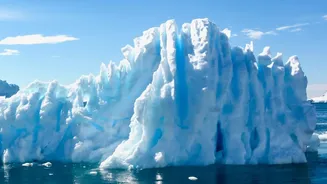
What Is the 'Doomsday Glacier'?
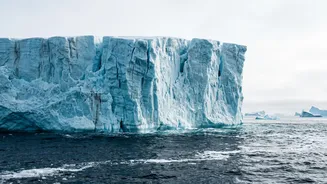
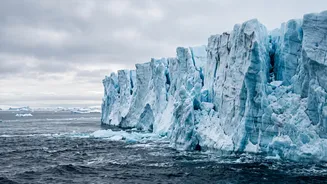
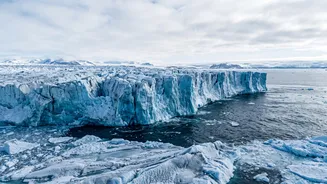
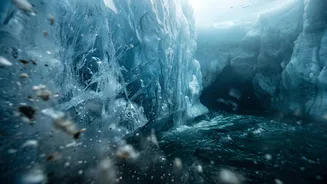
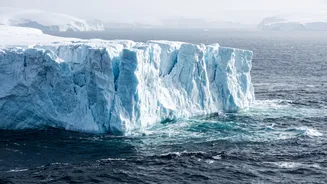
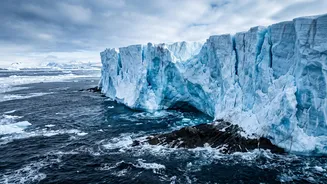
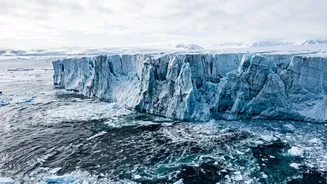
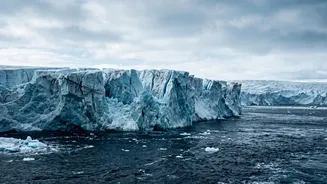
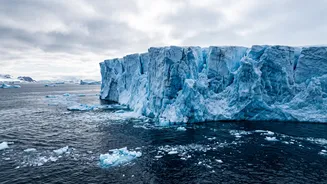
Thwaites is a colossal river of ice in West Antarctica, covering an area of 192,000 square kilometres, roughly the size of Gujarat or the state of Florida. It is one of the fastest-changing and most unstable glaciers on the planet. Its ominous nickname
comes from its critical role in global sea levels; if it were to collapse entirely, it holds enough ice to raise the world’s oceans by over 65 centimetres, or about two feet. More importantly, it acts as a natural dam, holding back the rest of the vast West Antarctic Ice Sheet. Its failure could trigger a wider collapse, leading to a multi-metre rise in sea levels over the coming centuries.
A Foundation Melting from Below
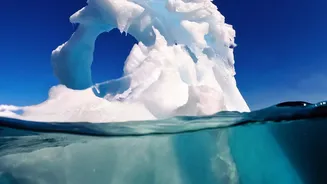
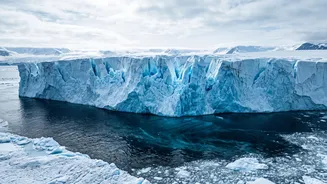
The primary threat to Thwaites isn’t from surface melting, but from the ocean itself. Relatively warm, salty ocean water is pushing its way underneath the glacier's floating edge, melting it from below. This is particularly dangerous where the glacier lifts off the seabed, a critical area known as the grounding line. For years, scientists have worried about this underwater melting, which causes the glacier to lose its grip on the seafloor and accelerate its slide into the ocean. This process creates a vicious cycle: as the glacier retreats, its grounding line moves further inland onto bedrock that slopes deeper, exposing even more ice to the warm ocean water.
New Study Doubles Previous Estimates
A recent study published in the journal Nature Communications has provided a stark new projection. Researchers from the University of California and NASA's Jet Propulsion Laboratory used advanced satellite data and computer models to look at a process previously underestimated: how tides pump warm water several kilometres further inland under the ice than once believed. By factoring in this 'tidal pumping' mechanism, the new models show that Thwaites could contribute up to 30 millimetres (1.2 inches) to global sea level rise by the year 2100. This figure is roughly double the average of previous projections, which stood at around 15 millimetres. Disturbingly, the study suggests this could happen even without any further increase in ocean warming beyond current conditions.
Is 30 Millimetres a Big Deal?
While 30 millimetres might not sound like a flood, it is a significant and worrying figure. This is the contribution from just one glacier, and it adds to the sea-level rise coming from all other melting ice and the thermal expansion of ocean water around the world. Globally, every centimetre of sea-level rise exposes an estimated six million more people to coastal flooding. This added height permanently raises the baseline for high tides and dramatically amplifies the destructive power of storm surges, leading to more frequent and severe coastal flooding. The study also warns there is a 60% chance the glacier could detach from a critical undersea ridge that helps to restrain it by 2100, which would further accelerate its retreat.
The View from India's Coastline
For India, a country with a 7,500-kilometre coastline and densely populated coastal cities, this news from a distant continent is a direct warning. Cities like Mumbai, Kolkata, Chennai, and the low-lying Sunderbans delta are already identified as highly vulnerable to the impacts of rising sea levels. An increase of 30mm from a single source like Thwaites exacerbates existing risks of coastal erosion, saltwater intrusion into freshwater sources, and more damaging floods during cyclones. Research from Antarctica is therefore not an abstract scientific exercise; it provides crucial data that informs long-term planning for coastal defence, urban infrastructure, and the protection of millions of lives and livelihoods along India's shores.