







The Gym-Goer's Best Friend
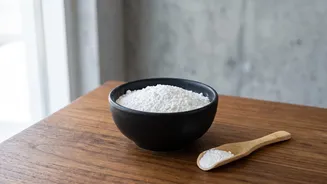
Walk into any fitness supplement store, and you'll find shelves stocked with creatine. It’s one of the most studied and effective supplements available, prized for its ability to boost performance during short, intense bursts of activity. Creatine is
a naturally occurring compound that helps your muscles regenerate their primary energy source, ATP. For years, the formula was simple: take creatine, hit the weights harder and for longer, and watch your strength and muscle mass increase. The supplement wasn't seen as the direct cause of muscle growth but rather the enabler of the hard work that was. Its benefits were considered to be unlocked almost exclusively by exercise.
What the New Science Says
A recent 12-week study from Texas A&M University has challenged this traditional view. Researchers investigated the effects of creatine on healthy adults between the ages of 45 and 65. The participants were divided into groups, some of whom followed a structured exercise and diet program, while others did not. Within these groups, individuals were randomly given either 10 grams of creatine daily or a placebo. The results were surprising. The participants who took creatine but did not engage in the exercise program still saw significant benefits. On average, the non-exercising creatine group gained approximately 2.4 pounds of lean tissue mass over the 12 weeks.
Strength Gains Without the Strain?
Beyond just an increase in lean mass, the non-exercising group who supplemented with creatine also demonstrated improvements in strength. They showed increased performance in both leg press and bench press exercises, despite not actively training. Of course, the participants who combined creatine with a regular workout routine experienced even more pronounced results. They saw greater gains in strength, a more significant increase in lean mass (around 3 pounds), and a reduction in body fat percentage. This confirms creatine's powerful synergistic effect with exercise but highlights its potential as a standalone agent for maintaining and even building muscle tissue.
Muscle Growth or Preservation?
This raises a crucial question: is creatine magically building new muscle from scratch, or is something else at play? The answer likely involves a bit of both, with a strong emphasis on preservation. As we age, we naturally lose muscle mass, a condition known as sarcopenia. This age-related decline can be accelerated during periods of inactivity or when dieting. The new research suggests that creatine helps counteract this process. It appears to preserve lean tissue that might otherwise be lost and supports the muscle's underlying health, which in a sedentary state can manifest as a net gain. Some of the initial weight gain is also attributed to creatine pulling more water into muscle cells, a process called cell swelling, which can itself trigger anabolic (muscle-building) signals.
The Takeaway for the Average Person
Before you trade your gym membership for a tub of creatine, it's important to keep these findings in perspective. The study focused on middle-aged and older adults, a demographic where muscle preservation is a key health concern. For this group, creatine could be a valuable tool to help maintain strength and independence. However, for anyone looking to build significant, noticeable muscle mass and transform their physique, there is no substitute for resistance training. The benefits of creatine when combined with exercise still far outweigh the modest gains seen without it. The research doesn't present creatine as a replacement for working out, but rather broadens its application as a supplement that supports muscle health across a wider range of lifestyles and age groups.