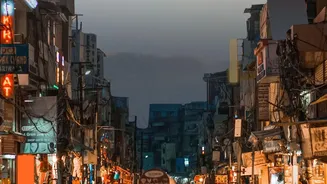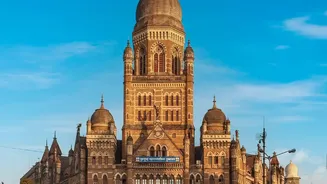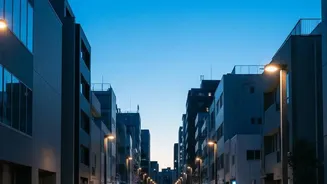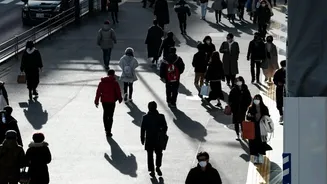








As our cities grow more congested, the dream of a quiet, walkable street becomes more appealing. But what does that really mean? Two terms often used are 'car-free' and 'pedestrian-priority', and they are not the same thing.
The Car-Free Absolute
A car-free zone is exactly
what it sounds like: an area where private motor vehicles are prohibited. This is the most straightforward approach to creating a pedestrian-friendly space. Think of a complete ban on cars, motorcycles, and other personal vehicles from entering a specific street or an entire district. The goal is to eliminate vehicle traffic entirely to create a space exclusively for people on foot, cyclists, and for public enjoyment. Exceptions are typically made for emergency services, delivery vehicles during specific, limited hours, and sometimes public transport like trams. These zones are often found in historic city centres or bustling commercial areas where the high volume of foot traffic makes vehicle presence unsafe and undesirable. The result is a dramatic reduction in noise and air pollution and a much safer environment.
Pedestrian-Priority: The Shared Approach
Pedestrian-priority is a more nuanced concept. Instead of an outright ban, it redesigns the street to make pedestrians the primary users, forcing cars to act as 'guests'. This approach, often called a 'shared street' or, in its original Dutch form, a 'Woonerf' (meaning 'living street'), allows cars to enter but uses clever design to ensure they travel at very slow speeds, typically around 10-15 km/h. Key features include the removal of traditional kerbs and sidewalks to create a single, level surface for everyone. Planters, benches, play areas, and varied paving materials are used to create obstacles that naturally slow drivers down, forcing them to be more aware. The rules are communicated through design rather than signs, encouraging negotiation and cooperation between all street users.
Example: Fes el-Bali, Morocco
For a true car-free experience, look no further than the ancient medina of Fes el-Bali in Morocco. It is considered one of the world's largest and oldest urban areas completely free of cars. Its nearly 10,000 narrow, winding alleyways are physically too small for modern vehicles to navigate. For centuries, daily life and commerce have thrived here with transportation relying on pedestrians, donkeys, and handcarts. This isn't a modern policy decision but a continuation of a city fabric that predates the automobile entirely, proving that vibrant economic and social life doesn't require cars at its centre.
Example: Barcelona's Superblocks
Barcelona offers a powerful example of a pedestrian priority system with its 'Superblocks' (superilles). The city takes a grid of nine city blocks and redirects through traffic to the perimeter. The streets inside the superblock remain open to local residents and delivery vehicles, but with a strict speed limit of 10 km/h. The reclaimed space is transformed with benches, planters, and playgrounds. This model doesn't ban cars entirely but drastically reduces their dominance, successfully lowering traffic and noise pollution while creating new public spaces for residents to enjoy.
The Dutch 'Woonerf' Innovation
The Netherlands pioneered the pedestrian priority concept in the 1970s with the Woonerf, or 'living street'. In a Woonerf, the street is a social space. Children can play, and neighbours can socialise. Design is everything: there are no continuous kerbs, and the path for cars is often curved or interrupted by trees and parking spaces, making it impossible to drive fast. Pedestrians have the right of way everywhere. This concept has been adopted worldwide, often called 'home zones' in the UK or simply 'shared streets', showing how to tame traffic and return residential streets to the people who live on them.
Relevance in the Indian Context
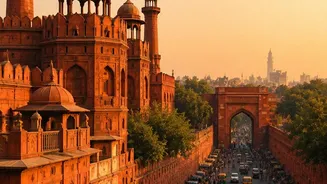
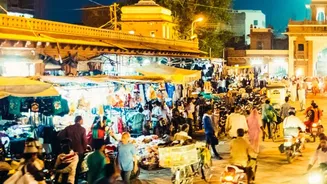
The conversation around pedestrian friendly streets is gaining significant momentum in India. Cities are grappling with intense traffic congestion, air pollution, and a lack of safe public spaces. In response, several pilot projects have emerged. For instance, Chennai’s T. Nagar Plaza and Delhi’s renovated Chandni Chowk and Ajmal Khan Road in Karol Bagh have experimented with pedestrianisation, restricting vehicle access to create safer, more pleasant shopping environments. These initiatives, while facing their own unique challenges, highlight a growing recognition that creating people first spaces can boost local economies and improve the quality of urban life. They serve as important case studies for other Indian cities exploring similar transformations.