

The Case for a Renaissance Education
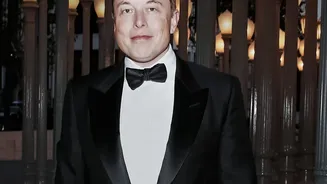
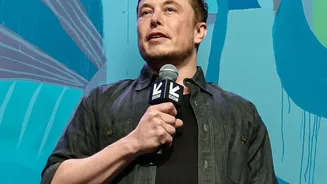
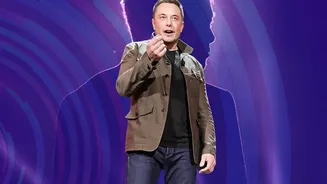
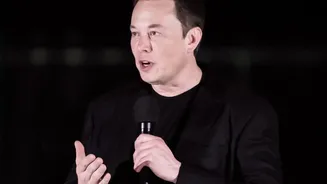
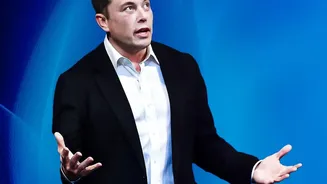
In a world racing toward automation, the path to a future-proof career might not be what you think. While many assume deep specialisation in a single technical field is the safest bet, Tesla and SpaceX CEO Elon Musk suggests the opposite. In a recent
interview, he advised young people to pursue the broadest possible education. "My recommendation for education would be to get as broad-based education as possible," he stated, specifically including "arts and sciences, engineering, wide general knowledge." This runs counter to the prevailing narrative that has pushed students towards narrowly defined STEM tracks for years. Musk’s point is not that technical skills are unimportant, but that in a world where AI can perform complex tasks, the human advantage shifts. It moves from being able to do the work to being able to define what work is worth doing. That requires a much wider lens.
The Art of Asking Better Questions
So, why would an arts or humanities background be valuable when interacting with a superintelligent machine? Musk's logic comes down to one critical skill: asking the right questions. He frames the ability to effectively communicate with AI, a practice often called 'prompt engineering', as a direct result of having a wide knowledge base. "In order to know what to ask the robots for, you need to be able to formulate the question," he explained. Someone with a grasp of history, psychology, and culture can frame a problem in a more nuanced way than someone who only understands code. If an AI can write a report, generate an image, or analyse data, the truly valuable human in the loop is the one who can provide the context, creativity, and critical judgment to guide the AI toward a meaningful result. Musk sees this as an old skill finding a new, critical application. It's not about learning a new course called 'prompting'; it's about developing the intellectual breadth to formulate clear goals.
Connecting Science and Engineering
Of course, Musk isn't telling aspiring professionals to abandon technical fields. His advice is a call for integration, not replacement. He explicitly includes science and engineering as core components of a broad education. The ideal professional of the future, in this view, is someone who can bridge the gap between different domains. An engineer who also understands art and history is better equipped to design products that people will actually want to use. A scientist with a foundation in ethics and philosophy is better prepared to grapple with the societal implications of their work. As AI handles more routine technical tasks, the demand will grow for individuals who can connect ideas across disciplines, identify unforeseen problems, and guide technology with human-centric values. The goal is to cultivate minds that can see the whole board, not just a single piece.
What This Means for India's Future Workforce
Musk's perspective holds particular weight for India, where the education system has traditionally placed a heavy emphasis on rote learning and specialisation, particularly in engineering and medicine. While this model produced generations of skilled professionals for the industrial and IT eras, the age of AI demands a different kind of thinking. The ability to think critically, creatively, and ethically—skills nurtured by a liberal arts education—is becoming a key differentiator in the global job market. As automation begins to handle routine coding and analysis, the 'what' and 'why' become more important than the 'how'. For students and parents, this suggests a need to value a more holistic educational path that encourages curiosity and cross-disciplinary knowledge, rather than focusing solely on exam scores in a narrow field. The most resilient careers will belong to those who can blend India’s technical prowess with a deep, humanistic understanding of the world.