






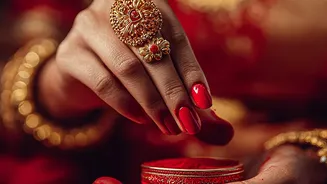
The Devotion of Queen Veeravati
The most famous legend associated with Karwa Chauth is that of Queen Veeravati. The beloved only sister of seven brothers, she was observing her first Karwa Chauth at her parents' home. As the day progressed, the strict fast from sunrise, without food
or water, took its toll. Seeing their sister weak with hunger and thirst as she desperately waited for the moon to rise, the brothers couldn't bear her suffering. To trick her into eating, they created an illusion of the moon by holding a mirror behind a Pipal tree or, in some versions, by lighting a fire behind a mountain. Believing the moon had risen, Veeravati broke her fast.
A Test of Faith
The moment she took her first bite of food, ill omens appeared, and word soon arrived that her husband, the king, had died. Heartbroken, she rushed towards her husband's kingdom. On the way, she met Goddess Parvati and Lord Shiva. Parvati explained that Veeravati had been tricked by her brothers and that her husband's fate was the result of breaking the fast before the actual moonrise. The goddess, moved by Veeravati's distress, advised her to observe the Karwa Chauth fast again with absolute devotion. Veeravati did so, and through her unwavering faith and adherence to the rituals, the god of death, Yama, was forced to restore her husband's life.
Rituals Rooted in Legend
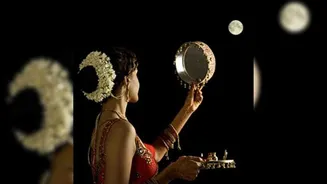
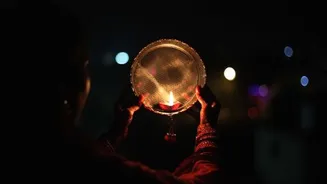
This story is the narrative backbone of the festival's key rituals. The day-long 'nirjala' fast (without water) reflects Veeravati's initial sacrifice. The ritual of viewing the moon through a sieve ('chhalni') before breaking the fast is a direct echo of her story. It acts as a way to confirm the authenticity of the moon, ensuring the mistake that led to such dire consequences is not repeated. Symbolically, the sieve is also said to filter out negativity, allowing the observer to see their relationship with clarity and pure affection. After viewing the moon, women look at their husbands through the same sieve before finally breaking their fast.
From Sunrise to Moonrise
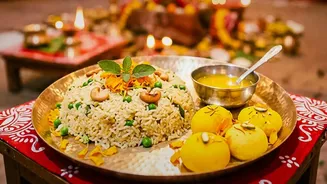
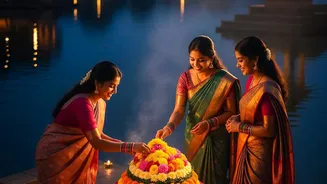
The day's observance begins before sunrise with 'Sargi', a meal and collection of gifts given by a mother-in-law to her daughter-in-law to provide sustenance for the fast ahead. It is a gesture of love and blessing. Later in the day, another exchange called 'Baya' takes place, where the married woman's mother sends gifts to her in-laws, or the daughter-in-law presents a gift to her mother-in-law, signifying gratitude and respect. Women often gather in the evening to perform a group 'puja', worshiping Lord Shiva and Parvati and narrating the 'vrat katha' or stories of the fast, including Veeravati's tale.
A Modern Celebration of Partnership
While deeply rooted in tradition, Karwa Chauth has evolved. In contemporary culture, it is often seen as a romantic festival that celebrates the bond of love and partnership. Its portrayal in popular films has cemented its status as a grand, emotional gesture. Increasingly, the festival is becoming more inclusive. Many men now choose to fast alongside their wives as a symbol of mutual respect and shared partnership. Unmarried women sometimes observe the fast in the hope of finding a loving partner, and technology allows couples separated by distance to celebrate together virtually. This evolution shows the festival's ability to adapt while keeping its core message of love and sacrifice alive.