


A Discovery on Mount Sharp
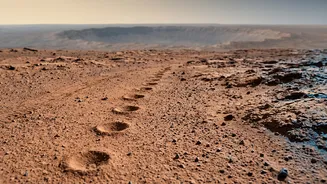
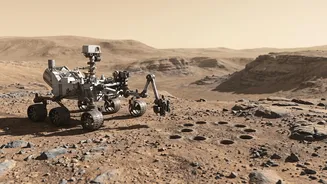
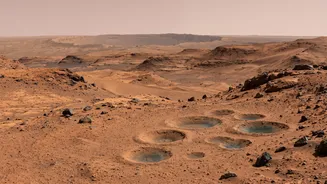
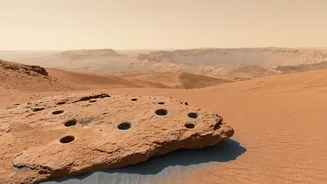
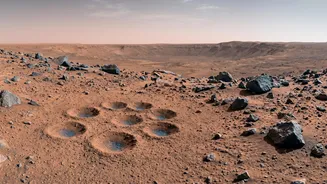
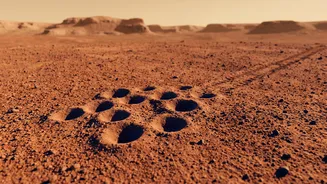
While navigating a region on Mount Sharp known as Valle Grande, the Curiosity rover transmitted images of something peculiar dotting the landscape. Unlike the deep, dramatic craters left by meteorite impacts, these were small, unusually broad, and shallow
divots in the bedrock. One of the pits measures just about one centimeter across. While holes on Mars are nothing new, this specific type of formation is unlike anything scientists have observed in the rover's 14 years of exploration, prompting a closer look. After so much time on the surface, Mars still has new ways of being weird.
Why These Holes Are Different
Typically, small pits in Martian rock are explained by a straightforward geological process. Harder pebbles or mineral nodules embedded in softer rock resist erosion longer than their surroundings. Eventually, these harder bits weather away, leaving behind a cavity. However, the new holes discovered by Curiosity don't fit this model. They are much wider and shallower than previously seen features, and crucially, there are no obvious pebbles or nodules nearby that look like they once occupied the pits. This lack of a clear cause is what has the mission's science team intrigued and ready to investigate further.
Gathering Clues With Advanced Tools
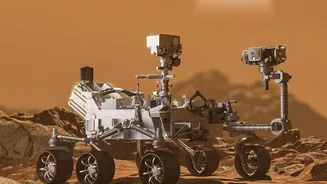
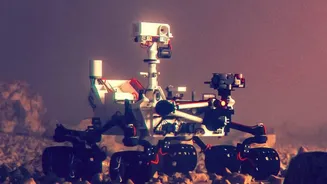
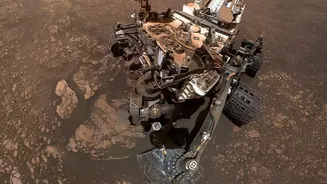
To solve the mystery, the science team is deploying Curiosity's suite of advanced instruments. The rover has used its Mars Hand Lens Imager (MAHLI) to take detailed, close-range photographs of the holes. At the same time, its Mastcam cameras have captured overlapping stereo images of the surrounding terrain. This data will allow scientists back on Earth to construct detailed three-dimensional models of the pits. By precisely measuring their shapes, depths, and the slope of their walls, researchers hope to work backward to figure out how they formed. The team is also analyzing the chemical composition of adjacent rock layers, which show rapid changes and could hold clues about the ancient Martian environment when these features were created.
What Are the Possible Explanations?
While scientists are avoiding definitive conclusions for now, they are exploring several geological possibilities. The holes could be the result of a specific type of erosion, changes in the rock's mineral composition over time, or the loss of some material that was once there. Other possibilities for pits on Mars, in general, include the collapse of ancient underground lava tubes or tectonic stresses that fracture the surface. Another explanation for certain types of sinkholes is a feature called a karst, where groundwater dissolves bedrock, but this is considered less likely on Mars due to the lack of carbonate rocks like limestone. For now, the process remains a genuine geological puzzle. There is no evidence suggesting the holes have an extraordinary or biological origin; the mystery is about the specific combination of natural forces at play.
A Planet That Still Surprises
This discovery comes as Curiosity explores new territory, moving through sulfate-rich layers above a unique, web-like "boxwork" terrain it had previously studied. Each new layer and strange formation provides a richer understanding of Mars's complex history. These holes are just the latest example of how the Red Planet continues to challenge our assumptions. They are a reminder that even after years of exploration, there are still fundamental questions to answer about how Mars went from a world that once hosted rivers and lakes to the cold, dry desert we see today. The rover's ongoing mission is to read these clues in the rocks, one puzzle at a time.