



Why Is Saffron So Precious?
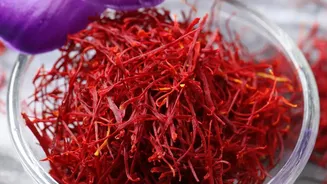
Known as 'red gold', saffron's high price comes down to its incredibly laborious harvesting process. The spice consists of the three delicate red stigmas found in the centre of the Crocus sativus flower. Each flower produces only three of these threads,
and they must be picked by hand at dawn before the flower opens to the sun. It takes around 75,000 flowers to produce a single pound of saffron, a task that requires immense manual labour and specific growing conditions, primarily found in countries like Iran. This rarity and effort are why even a small amount is a significant purchase, making it all the more important to extract every bit of its potential.
The Science of Saffron's Magic
To understand how to use saffron, it helps to know what you're trying to release from the threads. Three main chemical compounds are responsible for its character. Crocin provides the vibrant, golden-yellow colour. Picrocrocin is responsible for the unique, slightly bitter taste. And Safranal delivers the distinct, hay-like aroma. Crucially, these compounds are primarily water-soluble, not fat-soluble. This means simply throwing the threads into hot oil or a pan will not effectively draw out their flavour and colour. They need time in a warm liquid to fully activate and release their essence.
The Golden Rule: Blooming and Infusion
The single most important technique for cooking with saffron is called 'blooming' or 'infusing'. This simple step is the difference between a disappointing dish and a spectacular one. Instead of adding dry threads directly to your food, you first steep them in a warm liquid. Gently crush the threads in a mortar and pestle or between your fingers to help break down the plant cells. Then, place the crushed threads in a few tablespoons of warm (not boiling) water, milk, or broth for at least 15 to 20 minutes. Using boiling liquid can actually destroy some of the delicate aromatic compounds. You will see the liquid turn a deep, rich orange-red. This infusion, both the liquid and the threads, should then be added to your recipe, usually near the end of the cooking process to preserve its aroma.
How Much Is Enough?
With saffron, less is truly more. Using too much is one of the most common mistakes and can make a dish taste unpleasantly bitter or medicinal. A general rule of thumb is that a small pinch, about 15 to 20 threads, is sufficient to flavour and colour a dish that serves four to six people, such as a pot of rice or a stew. For most applications, you only need about two to three threads per serving. Trust that a small quantity, when properly infused, is potent enough to impart its signature character without overwhelming the other ingredients in your dish.
Common Saffron Mistakes to Avoid
To get your money's worth from this prized spice, steer clear of a few frequent errors. The most common is adding dry threads directly to a dish, which results in uneven colour and muted flavour. Another is using too much saffron, which leads to bitterness. Also, avoid using boiling water for your infusion, as extreme heat can damage the delicate safranal responsible for its aroma. Finally, remember that saffron's key compounds do not dissolve in oil, so blooming in water or milk first is essential, even if the recipe is fat-based.
Perfect Pairings for Saffron
Once you've mastered the infusion technique, you can confidently add saffron's luxurious touch to a variety of dishes. It has a natural affinity for rice, making it a star ingredient in classics like Spanish paella, Italian risotto Milanese, and Indian biryanis. Its flavour also shines in seafood stews like French bouillabaisse and adds a sophisticated note to chicken or lamb tagines. In desserts and drinks, it provides a beautiful golden hue and subtle warmth to milk-based sweets like kheer, custards, or even a simple cup of warm milk or tea.