







What Exactly Are CAFE Standards?
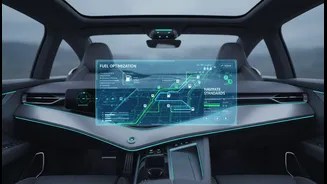
Think of Corporate Average Fuel Economy (CAFE) standards as a report card for a car company's entire fleet, not just a single model. Instead of saying every car must achieve a certain mileage, the rules require that the average fuel efficiency of all
cars a manufacturer sells in a year—from small hatchbacks to large SUVs—must meet a specific target. If a company sells some fuel-guzzling models, it must balance them out by selling a large number of highly efficient ones to avoid penalties. The goal, set by the Bureau of Energy Efficiency (BEE), is to force automakers to build and sell more fuel-efficient cars overall, reducing India's oil imports and cutting carbon emissions.
The Jump From Phase II to Phase III
India is currently in the CAFE II phase, which began in 2022. The newly drafted CAFE III norms, set to take effect from April 1, 2027, represent a significant leap in ambition. The new rules will be phased in over five years, from FY2028 to FY2032. The targets are much stricter; for instance, the proposed fleet average for 2027-28 is around 94.76 grams of CO2 per kilometre, which will tighten to about 78.90 g/km by 2031-32. This represents a roughly 30% increase in stringency by the end of the cycle compared to current norms, pushing manufacturers to innovate much faster. The testing method will also shift from the older Indian cycle to the more realistic Worldwide Harmonised Light Vehicles Test Procedure (WLTP).
The Impact on Your Wallet
This is the crucial question for every car buyer. The short-term answer is that new cars could become more expensive. To meet these tougher targets, manufacturers must invest heavily in new technologies like advanced engines, lightweight materials, start-stop systems, and hybrid powertrains. These research and development costs are often passed on to the consumer. However, there's a significant long-term benefit: lower running costs. A more fuel-efficient car means you'll spend less on petrol or diesel over the vehicle's lifetime, which can eventually offset the higher initial purchase price. One rating agency estimated the cumulative fuel cost savings for the country could be around Rs 38,000 crore between 2028 and 2032.
A Major Push for EVs and Hybrids
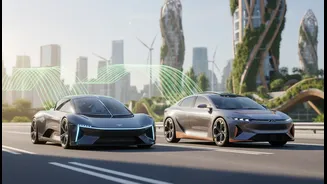
Relying on petrol and diesel engines alone will make it incredibly difficult for carmakers to meet CAFE III targets. The new rules are structured to aggressively promote cleaner alternatives. The framework includes 'super credits,' which allow sales of electric or strong hybrid vehicles to count for more when calculating a company's fleet average. For the first time, the draft rules also give a regulatory advantage to vehicles running on ethanol-blended fuel and compressed biogas (CBG). This policy push means you can expect to see a much wider variety of hybrid, flex-fuel, and fully electric models launching in India over the next few years as companies race to balance their portfolio.
Will Some Popular Models Disappear?
It's a possibility. Manufacturers with portfolios heavy on large, petrol- or diesel-powered SUVs will face the biggest challenge. These models have lower fuel efficiency and push the corporate average in the wrong direction. To comply, companies might have to choose between discontinuing certain engine variants, introducing hybrid or electric versions of popular SUVs, or selling them in much lower numbers, balanced by high volumes of EVs. The rules don't ban any specific car, but they make it economically challenging for a manufacturer to have a lineup dominated by inefficient vehicles. This will likely reshape the model choices available in Indian showrooms.