


An Artist Who Embraces Technology
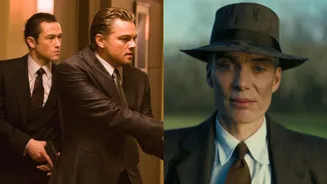
To understand Christopher Nolan’s view on artificial intelligence, one must first look at his filmography. He is not a director who shies away from technology. On the contrary, he has consistently been at the forefront of cinematic innovation. From popularizing
the use of IMAX cameras for feature films in 'The Dark Knight' to creating the mind-bending practical effects of a rotating hallway in 'Inception' and simulating a black hole in 'Interstellar,' Nolan has always used technology to create a more immersive and tangible experience for the audience. His preference for practical effects, large-format film, and complex sound design is legendary. This history makes it clear that his caution regarding AI is not the fear of a technophobe, but the principled stance of an artist who sees technology as a servant to the story, not its master.
The Demand for Better Tools
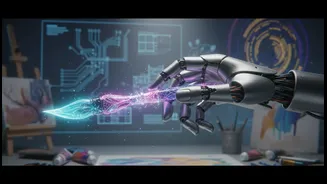
When Nolan speaks of expecting “better imaging tools,” he is not asking for AI to generate scenes from scratch. Instead, he is looking for advancements that can enhance a director's vision and offer new ways to capture and manipulate images. In past interviews, he has expressed optimism about how machine learning could be applied to visual effects, such as more seamlessly removing wires from complex stunts or advancing deepfake technology for specific, controlled uses. The key distinction for Nolan is control and purpose. He sees potential in AI as a sophisticated paintbrush that can help artists achieve their goals more effectively, whether that's in animation or hybrid photography. The goal is to augment human creativity, giving filmmakers more powerful and precise instruments to tell their stories, not to have the instrument play itself.
Rejecting the 'AI Slop'
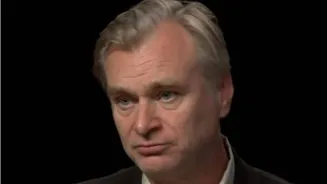
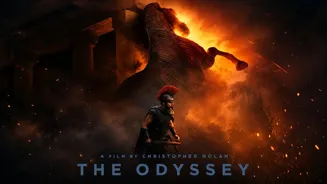
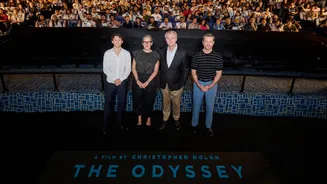
Nolan's strongest reservations are about the role of generative AI in replacing core creative functions. He has been vocal about what he and others, particularly younger generations, refer to as “AI slop”—low-quality, soulless content generated by algorithms. Speaking recently while promoting his new film 'The Odyssey,' Nolan observed that he has never seen such a rapid and widespread dismissal of a new technology from the public. He notes that Gen Z audiences, including his own children, have an immediate and harsh judgment of AI-generated content because they grew up in the online world where it originated and can spot its lack of authenticity instantly. For Nolan, the idea that AI could wholesale replace human creativity is, in his words, “a nonsense.” He believes there is a renewed interest in more tactile and real forms of storytelling, a trend that runs directly counter to a machine-led creative process.
Why His Opinion Carries Weight
In a Hollywood grappling with the implications of AI, a debate that fueled major industry strikes in 2023, Nolan's voice is particularly influential. He is not just a successful director; he is a brand synonymous with quality, originality, and the cinematic experience. His films are global blockbusters that prove audiences still have an appetite for complex, ambitious, and meticulously crafted stories. He points to the success of young, independent filmmakers like Kane Parsons ('Backrooms') and Curry Barker ('Obsession') as evidence that audiences are rewarding practical, human-driven filmmaking. While other respected directors like Martin Scorsese are exploring AI for storyboarding, and studios like A24 are partnering with tech giants, Nolan stands with figures like Guillermo del Toro in defending the sanctity of human authorship. His argument isn't just about art; it's also a market prediction that audiences will ultimately reject films that lack a human touch.