





A Curious Discovery in Gale Crater
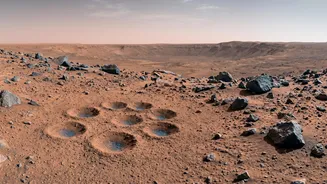
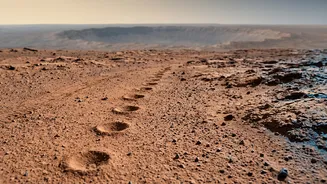
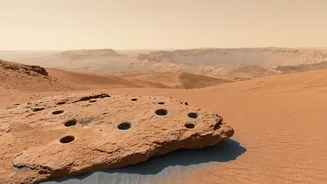
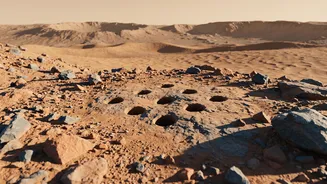
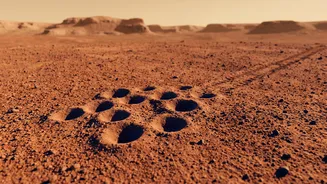
While climbing through a region known as Valle Grande on the slopes of Mount Sharp, the Curiosity rover spotted something odd: small, shallow divots dotting the rocky ground. These weren't the dramatic, deep pits that have previously sparked excitement
about underground caves, but something more subtle. One of the holes, photographed in detail by the rover's Mars Hand Lens Imager (MAHLI), measures only about one centimeter across. Pits and holes are not uncommon on a planet that has been bombarded by meteorites for billions of years, but the science team immediately recognized that these were different from anything the rover had encountered before.
Why These Holes Are So Puzzling
So, what makes these tiny depressions so intriguing? Typically, small holes in Martian bedrock form when harder pebbles or mineral nodules embedded in softer rock resist erosion longer than their surroundings. Eventually, the nodule weathers away, leaving a small cavity. However, the holes Curiosity found don't fit this model. They are unusually broad and shallow, and crucially, there are no obvious pebbles or nodules nearby that look like they once occupied the spaces. This lack of a clear cause is what has the mission's scientists perplexed. "After 14 years on the surface, Mars continues to surprise,” explained Michelle Minitti, a scientist on the rover's camera team.
Searching for an Explanation
With the usual explanation off the table, scientists are now working to figure out what created these features. The Curiosity rover is using its suite of instruments to gather more data. By creating three-dimensional models from stereo images, researchers can precisely measure the pits' shapes and depths. This will help them investigate other possibilities. The answer could lie in an unusual erosion process, specific changes in the rock's mineral composition, or complex processes that occurred when the rock sediments were first laid down and buried billions of years ago. The holes may seem small, but understanding their formation provides another piece of the puzzle of Mars's long and complex geological history.
Not to Be Confused with 'Skylights'
It is important to distinguish these small, shallow holes from another, more dramatic type of Martian pit that has also captured scientific attention. In other regions of Mars, particularly near giant extinct volcanoes, orbiters have spotted deep, dark, nearly circular pits. Scientists believe many of these are 'skylights'—collapsed sections of the roof of ancient underground lava tubes. These larger pits are exciting because they could be gateways to vast underground caverns, which would be shielded from the harsh radiation and extreme temperatures of the Martian surface. Such caves are considered prime targets in the search for signs of past or present microbial life and could even serve as shelters for future human astronauts. The holes found by Curiosity, however, are a different kind of mystery altogether.
What's Next for Curiosity?
For now, the investigation into the small holes in Gale Crater continues. The Curiosity rover will press on with its main mission: ascending Mount Sharp layer by layer to read the planet's history. Each layer of the mountain reveals a different era of Mars's past, providing clues about how its climate and environment changed over billions of years, particularly regarding the historical presence of water. Recent findings in the same area have also included a huge expanse of honeycomb-like polygonal fractures, another feature adding to the complexity of the area's past. While the team analyzes the data on the strange holes, the rover will continue its journey, knowing that the next surprise could be just over the next ridge.