



A Split Result Mission
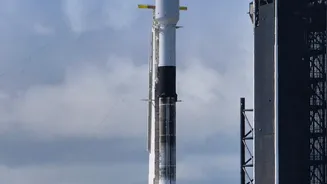
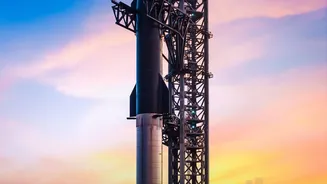
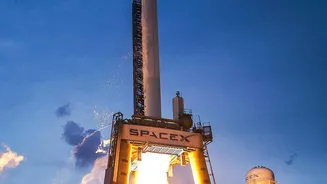
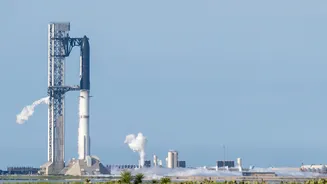
On Friday, November 13, 2026, the colossal Starship rocket lifted off from SpaceX's Starbase facility in Texas. The mission, designated Flight 15, had two ambitious primary objectives: deploy a batch of Starlink internet satellites and then, for the first
time, attempt to catch both the Super Heavy booster and the Starship upper stage back at the launch tower. While the launch itself was a success, the mission ended with a split result. The Starship spacecraft achieved its goals perfectly, but the massive Super Heavy booster's return did not go as planned. Due to an issue that led to low fuel, the booster's automated systems aborted the tower catch and diverted it for a splashdown in the Gulf of Mexico.
Payload Delivered
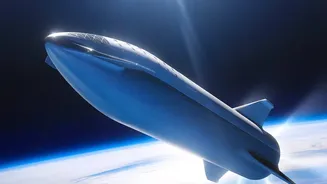
Before the landing drama unfolded, Starship had a job to do. After separating from the booster and firing its own engines to enter a stable orbit, the vehicle's payload bay doors opened. Over the next hour, it successfully deployed 26 next-generation Starlink V3 satellites. This deployment is a core part of SpaceX's business model, using its own increasingly capable rockets to build out its satellite internet constellation, which provides service to millions around the globe. Each Starship launch can carry a far greater satellite payload than the company's workhorse Falcon 9 rocket, making the expansion of the network faster and more efficient. Following the successful deployment, the Starship spacecraft spent nearly a full day in orbit, circling the planet 14 times while flight controllers monitored its systems.
The Holy Grail: A Perfect Catch
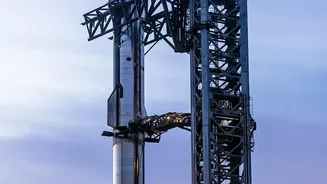
The most spectacular part of the mission occurred on Saturday, November 14. After its 22-hour journey in space, Starship performed a deorbit burn and began its fiery plunge back through Earth's atmosphere. Onlookers watched as the ship executed its signature 'belly flop' maneuver to slow down, before flipping to a vertical orientation and firing its Raptor engines for a precision landing. Instead of touching down on legs, the spacecraft guided itself directly between the two massive 'chopstick' arms of the launch tower, known as Mechazilla. The arms closed securely around the ship, catching it out of the air in a maneuver that had never been successfully performed on an orbital-class vehicle before. SpaceX celebrated the achievement as a monumental step toward a fully reusable rocket system.
Why The Catch Is a Game-Changer
Catching a rocket with the launch tower isn't just for show. It is the key to achieving the rapid reusability that is central to SpaceX's long-term vision. A rocket that lands on a drone ship or even on a landing pad requires significant time, equipment, and personnel to recover, inspect, and prepare it for another flight. By catching the vehicle directly with the launch tower, SpaceX can theoretically place it right back onto the launch mount, refuel it, and fly it again in a fraction of the time. This massive reduction in turnaround time is what could drastically lower the cost of accessing space. It transforms the rocket from a piece of disposable hardware into something more akin to an airplane, capable of frequent and routine flights.
Next Steps for Starship
While the successful catch of the Starship upper stage is a historic achievement, the work is far from over. The primary focus will now be on understanding the fuel issue that prevented the Super Heavy booster from being caught. SpaceX has successfully caught boosters on previous flights, so engineers will be investigating what went wrong this time to ensure it can be corrected. The company's ultimate goal is to reliably catch both the booster and the ship on every single flight. Achieving this 'double catch' is the final major hurdle before Starship can be considered fully and rapidly reusable, paving the way for more ambitious missions to the Moon, Mars, and beyond, and further cementing SpaceX's dominance in the commercial launch market.