




Beyond Ingenuity: The Next Leap in Martian Aviation
The world watched in awe as NASA's Ingenuity helicopter achieved the first powered, controlled flight on another planet. Initially a technology demonstration, Ingenuity completed 72 flights, proving that aerial exploration in Mars's thin atmosphere was
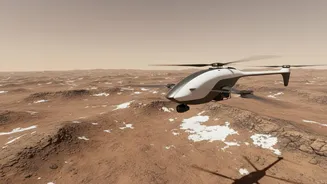
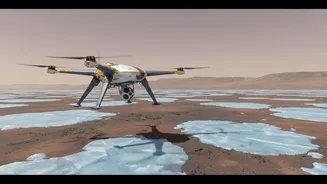
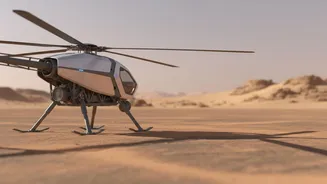
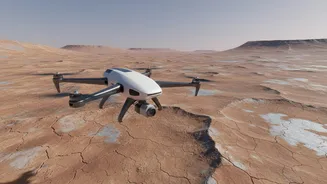
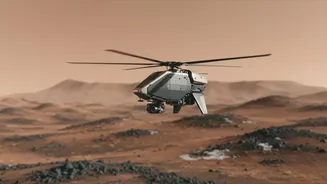
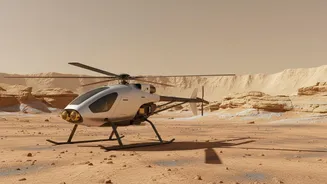
possible and could serve as a valuable scout for rovers. Building on this groundbreaking success, NASA's Jet Propulsion Laboratory (JPL) is developing the next evolution: the Skyfall mission. Unlike Ingenuity, which was primarily a flight test, Skyfall is a dedicated science mission. The concept involves sending a trio of more advanced, autonomous helicopters to the Red Planet, each equipped with scientific instruments to perform complex tasks that were beyond Ingenuity's scope.
The Search for Buried Treasure: Water Ice
The primary objective for the Skyfall helicopters is to find subsurface water ice. For future human explorers on Mars, water is the single most important in-situ resource. It's not just for drinking; water can be split into hydrogen and oxygen to create breathable air and, critically, rocket propellant for the return journey to Earth. Finding accessible ice deposits would drastically reduce the cost and complexity of a human mission, as it would mean astronauts wouldn't need to transport massive quantities of these essential supplies from Earth. Orbiters have detected signs of ice, particularly at the poles, but they can't confirm its depth or purity. Skyfall is designed to bridge this knowledge gap.
How Skyfall Works: Capes and Radars
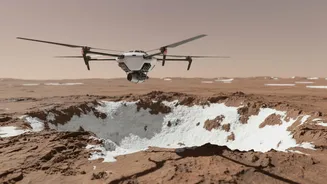
The Skyfall helicopters will be significantly more capable than their predecessor. To find hidden ice, each helicopter will be equipped with a specialized ground-penetrating radar. In recent tests, engineers at JPL have been developing a unique, lightweight flexible antenna for this radar that unfurls during flight, earning it the nickname of a "cape." This radar is designed to peer up to 16 feet (about 5 meters) beneath the Martian surface while the helicopter flies low and slow, mapping out the layers where soil might give way to ice. In addition to the radar, the helicopters will carry 13-megapixel cameras for creating detailed 3D terrain maps and infrared imagers to study the composition of the surface dust and rock.
A Daring Deployment
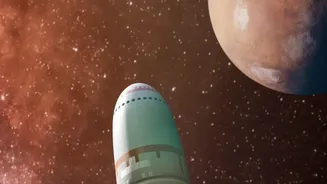
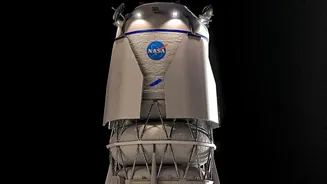
The mission's name, Skyfall, hints at its innovative and dramatic deployment method. Instead of being carefully lowered to the surface by a lander like the Perseverance rover, the Skyfall mission concept involves releasing the three helicopters while the entry capsule is still descending through the atmosphere. After separating mid-air, the helicopters would autonomously start their rotors, fly themselves away from the descent stage, and land individually on the Martian surface. This maneuver would eliminate the need for a complex and expensive landing platform, significantly reducing mission cost and risk.
The Aerial Advantage
While rovers like Curiosity and Perseverance have been revolutionary, they are limited by terrain. They move slowly and cannot access steep crater walls, canyons, or rugged landscapes where some of the most scientifically interesting features—including exposed ice layers—might be found. Helicopters offer a powerful solution. They can quickly survey large areas, fly into challenging terrain that is inaccessible to a rover, and provide a detailed aerial perspective to identify the most promising and safest locations for future human landing sites. By combining speed, range, and the ability to get a close-up view, the Skyfall helicopters represent a new paradigm for planetary exploration.